Hacked, Leaked, and Held for Ransom: The Defining Cybersecurity Breaches of 2026 So Far
If the first half of 2026 has made anything abundantly clear, it is that cybersecurity is no longer merely a background concern relegated to IT departments—it is front and center, woven into almost every major geopolitical and corporate story of the year. While physical wars continue to rage, climate crises worsen, and global health remains in a precarious state, a volatile digital current runs beneath it all, touching every facet of modern civilization.
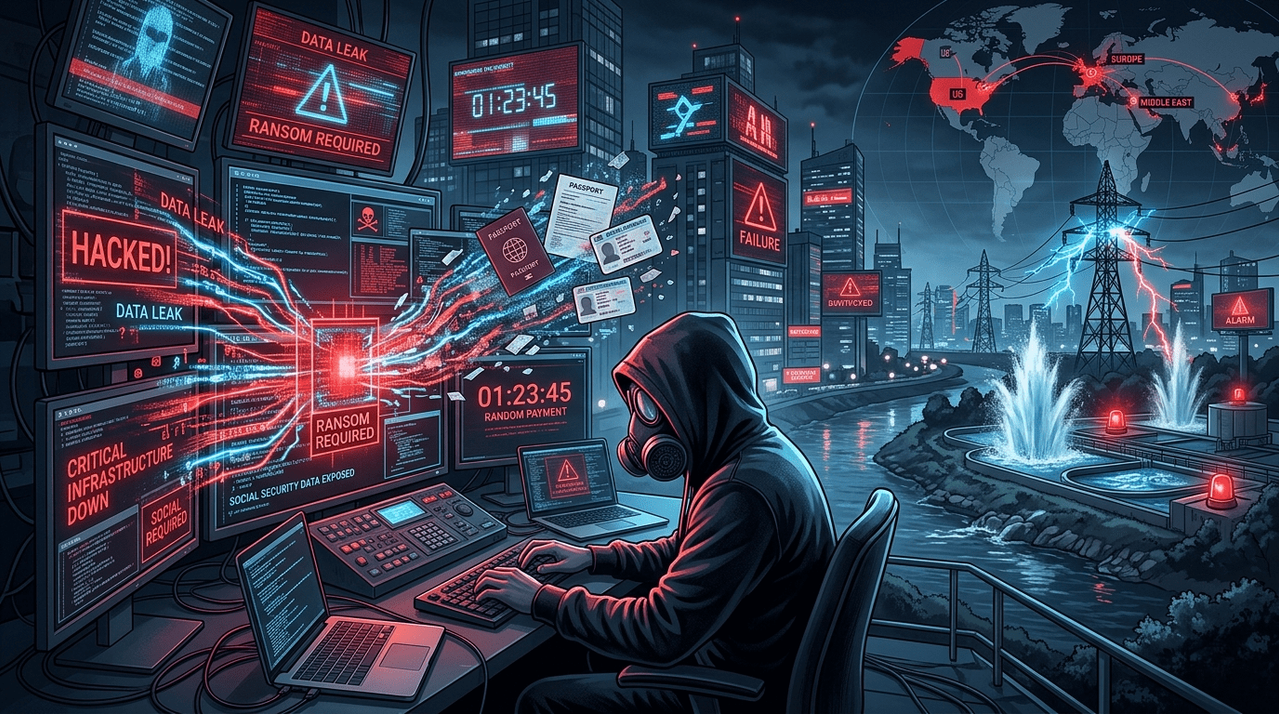
Today, wars are fought on digital fronts parallel to physical battlefields. We are witnessing governments weaponizing their citizens’ data, autonomous botnets quietly undermining democratic institutions, and nation-state hackers aggressively targeting civilian infrastructure—from European power grids to American water systems. Concurrently, highly organized ransomware syndicates are holding multinational corporations and educational institutions hostage for massive payouts. The attacks of 2026 are unequivocally bolder, significantly more destructive, and increasingly harder to contain.
As we navigate the midpoint of this horrendous year of digital attacks and hybrid warfare, it is critical to analyze the worst hacks and data breaches so far, and project how these vulnerabilities will reshape our digital landscape going forward.
Unprecedented Exposure: The DOGE Social Security Data Crisis
One year after operatives from the Elon Musk-led Department of Government Efficiency (DOGE) swept through federal agencies to aggressively dismantle them from the inside out, the profound data security lapses occurring under their watch are finally coming to light.
Following DOGE's intervention at the U.S. Social Security Administration, massive uncertainties remain regarding the integrity of the nation’s most sensitive data. As federal lawsuits continue to unfold, alarming whistleblower testimonies claim that DOGE operatives uploaded a live, unredacted copy of the Social Security database to an unsecured, third-party server. This database allegedly contained the Social Security numbers and highly sensitive associated personal information of the vast majority of living Americans.
In recent court filings, the Social Security Administration admitted it cannot verify exactly what data was retained on that server. However, it was revealed that DOGE signed an agreement with an outside political advocacy group under the guise of investigating voter fraud—a claim consistently amplified by President Trump despite an absence of evidence. The paramount fear among cybersecurity and privacy advocates is the weaponization of this database to target American citizens for spurious, politically motivated reasons. According to top House Democrats investigating the incident, this exposure "could very well be the largest data breach in our nation’s history."
Critical Infrastructure Under Siege: Water Systems and Energy Grids
Geographic boundaries offer little protection in the modern cyber landscape. Across Europe, a rash of cyberattacks targeting civilian energy and water supplies has established a deeply troubling trend. Several sophisticated hacks, widely attributed to Russian state actors, have crossed the threshold from digital disruption to real-world physical harm.
At the tail end of last year, Poland’s energy grid was crippled by computer-destroying malware. Similar attacks successfully targeted a Swedish thermal plant and compromised a Norwegian dam, resulting in the unscheduled release of massive volumes of water. Earlier this year, hackers pivoted back to Poland, this time targeting critical water treatment facilities, demonstrating that Russia’s hybrid warfare tactics are aggressively extending beyond standard espionage.
Furthermore, escalating kinetic conflicts—specifically the recent war involving the U.S., Israel, and Iran—have triggered severe retaliatory warnings. Cybersecurity agencies report that Iranian state-sponsored hackers are actively scanning and targeting critical infrastructure within the United States. Privately owned water utilities, which often lack the robust cybersecurity architectures found in the financial or federal sectors, remain highly vulnerable soft targets.
The Shift to Destructive Malware: The Stryker Medical Hack
The evolution of cyber warfare is perhaps best illustrated by the March cyberattack on Stryker, a leading U.S. medical technology company. In a highly coordinated strike, Iranian hackers breached the corporate network and deployed destructive "wiper" malware, remotely erasing tens of thousands of employee devices simultaneously. This caused immediate and widespread paralysis of the company’s global operations for several days.
This breach represents a marked, dangerous shift in Iranian hacking tactics. Historically focused on stealthy espionage and hack-and-leak operations to secure political leverage, Iranian cyber units are now executing actively destructive hacks in direct retaliation for ongoing Middle Eastern conflicts. The U.S. government has definitively attributed the group behind the Stryker breach to an arm of Iranian intelligence. The financial fallout was severe, resulting in a material, negative impact on Stryker’s first-quarter earnings.
Social Engineering and Ransomware: Instructure and the ShinyHunters
While nation-states target infrastructure, cybercriminal syndicates continue to decimate the private and public sectors. The infamous 'ShinyHunters' gang has escalated its campaign, targeting dozens of organizations utilizing simple yet devastatingly effective voice phishing (vishing) techniques. These English-speaking threat actors excel at social engineering, systematically tricking employees into surrendering internal system access by posing as IT support personnel or frantic colleagues locked out of their accounts.
The education sector suffered a severe blow when ShinyHunters breached Instructure, the tech giant behind the ubiquitous Canvas learning management system. Hackers exfiltrated the private data and personal information of over 30 million students and staff. When Instructure hesitated to pay the ransom—following strict FBI guidance—the hackers escalated. They breached the systems a second time, maliciously defacing Canvas login screens precisely during national school finals, causing unprecedented disruption to exams across the United States. Ultimately, the company was forced into paying the ransom.
Instructure is far from the only victim. The ShinyHunters have orchestrated some of 2026’s largest breaches by volume, successfully stealing 40 million records from internet provider Charter and at least 6 million customer profiles from Carnival cruise lines.
The Fragile Open Source Supply Chain
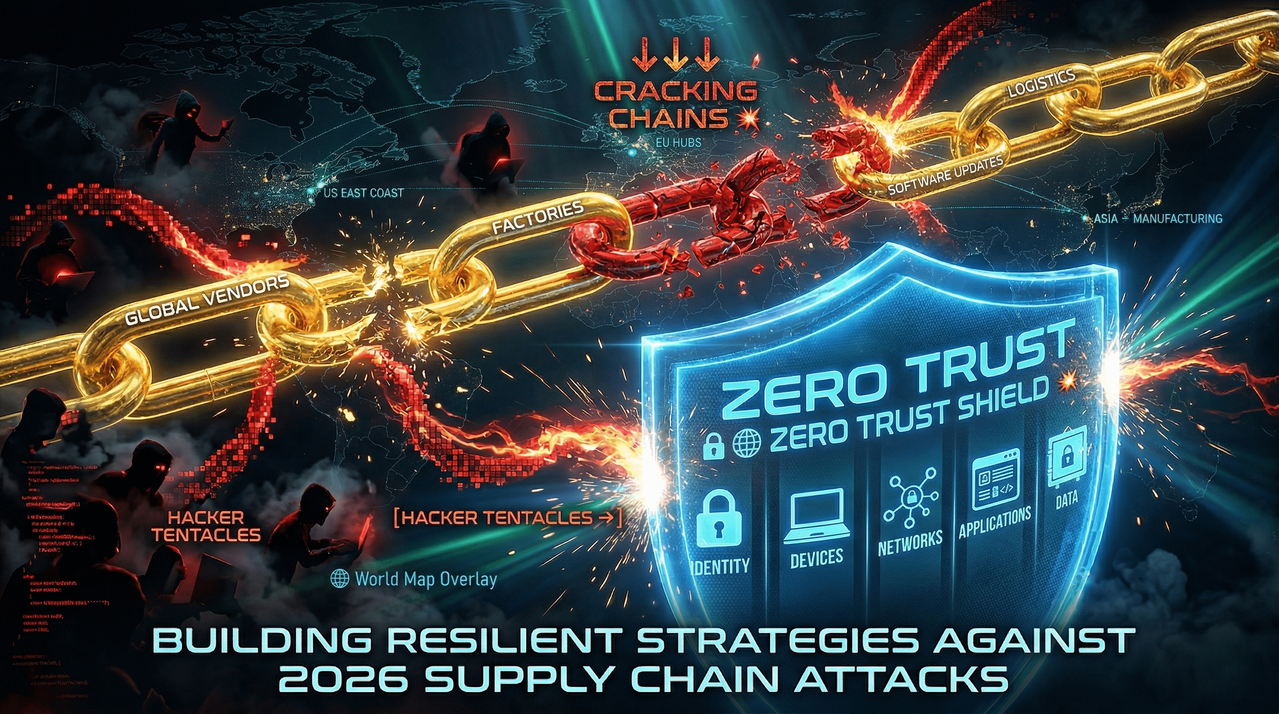
A series of ongoing, sophisticated attacks on open-source developers has triggered massive downstream compromises affecting Big Tech and enterprise customers. The software supply chain is under unprecedented assault.
Major pillars of the security community—including Aqua Security’s Trivy tool, the Bitwarden password manager ecosystem, and Checkmarx—were compromised this year. Threat actors injected malicious backdoors into software updates, allowing them to harvest passwords, credentials, and sensitive API tokens from any machine running the compromised software.
By exploiting these stolen credentials, hackers successfully leapfrogged into the internal networks of massive corporations reliant on these open-source tools, including AI juggernaut OpenAI and web hosting platform Vercel. The open-source ecosystem, built on trust and community contribution, remains a highly lucrative and vulnerable vector in the broader global tech infrastructure.
State-Sponsored Espionage: The FBI Surveillance Network Breach
In a startling admission in April, the U.S. Federal Bureau of Investigation (FBI) declared a "major cyber incident," triggering a legally mandated disclosure to Congress. Internal audits identified that one of the Bureau's highly sensitive surveillance systems had been deeply compromised.
Security reports indicate the breach exposed the phone numbers and identities of targets currently under active surveillance by federal agents. Intelligence officials have accused Chinese state-sponsored spies of breaching the unclassified network, which housed critical data regarding wiretaps and communication intercepts (such as pen register returns). By notifying lawmakers under current federal guidelines, the FBI effectively confirmed that the breach met the severe threshold of causing "demonstrable harm" to U.S. national security.
Corporate Paralysis: The Hasbro Disruption
The catastrophic potential of inadequate incident response planning was fully realized by the 103-year-old toy giant Hasbro. Following the discovery of malicious actors in its network in late March, the corporation—owner of global brands like Transformers, Peppa Pig, and Dungeons & Dragons—was effectively knocked offline for weeks.
During the prolonged outage, Hasbro’s primary websites were dark, and the company was entirely unable to process customer orders or manage global logistics. While corporate communications remained tightly sealed regarding data exfiltration or potential ransom payments, the sheer duration of the disruption forced the company to delay its financial reporting. By mid-May, Hasbro announced the immediate threat was contained, but the monumental financial costs and severe operational knock-on effects will inevitably impact the company's fiscal year performance.
The Identity Verification Paradox: A Honeypot of Passports
Over the past six months, there has been a massive, alarming uptick in the exposure of sensitive, government-issued identity documents. Unsecured cloud buckets and vulnerable databases have leaked millions of passport scans and driver’s licenses onto the public web. Vectors for these leaks range from a global hotel check-in system and a major money transfer application to a U.K. visa service and a specialized prison payphone provider.
These massive data spills highlight a glaring paradox in modern internet regulation. As closed-community applications lean heavily on stringent "Know Your Customer" (KYC) checks, and international governments push aggressive age-verification laws mandating adult identity checks for basic web access, corporations are forced to hoard massive caches of highly sensitive identity data.
The logic is brutally circular: the more mandatory ID-collection systems are implemented, the larger the honeypots of data become. As these databases inevitably leak—often due to simple, avoidable security lapses—the stolen IDs are weaponized by cybercriminals to bypass the very identity-checking systems they were stolen from. The mandated expansion of these verification systems practically guarantees an acceleration of devastating identity theft in the coming years.
Conclusion
The first half of 2026 has proven that no entity—be it a multinational corporation, a federal intelligence agency, a critical utility provider, or a public school system—is immune to the evolving sophistication of modern cyber threats. As geopolitical tensions continue to bleed into the digital realm and cybercriminal syndicates operate with impunity, organizations must drastically pivot from reactive mitigation to proactive, zero-trust cybersecurity architectures. The digital infrastructure that powers our society is fundamentally fragile, and the breaches of 2026 are a stark warning that the worst may be yet to come.

Comments
No comments yet. Be the first to share your thoughts!
Leave a Comment