Parker Files for Bankruptcy After Shutdown Reports: What It Means for Fintech and E-Commerce Businesses
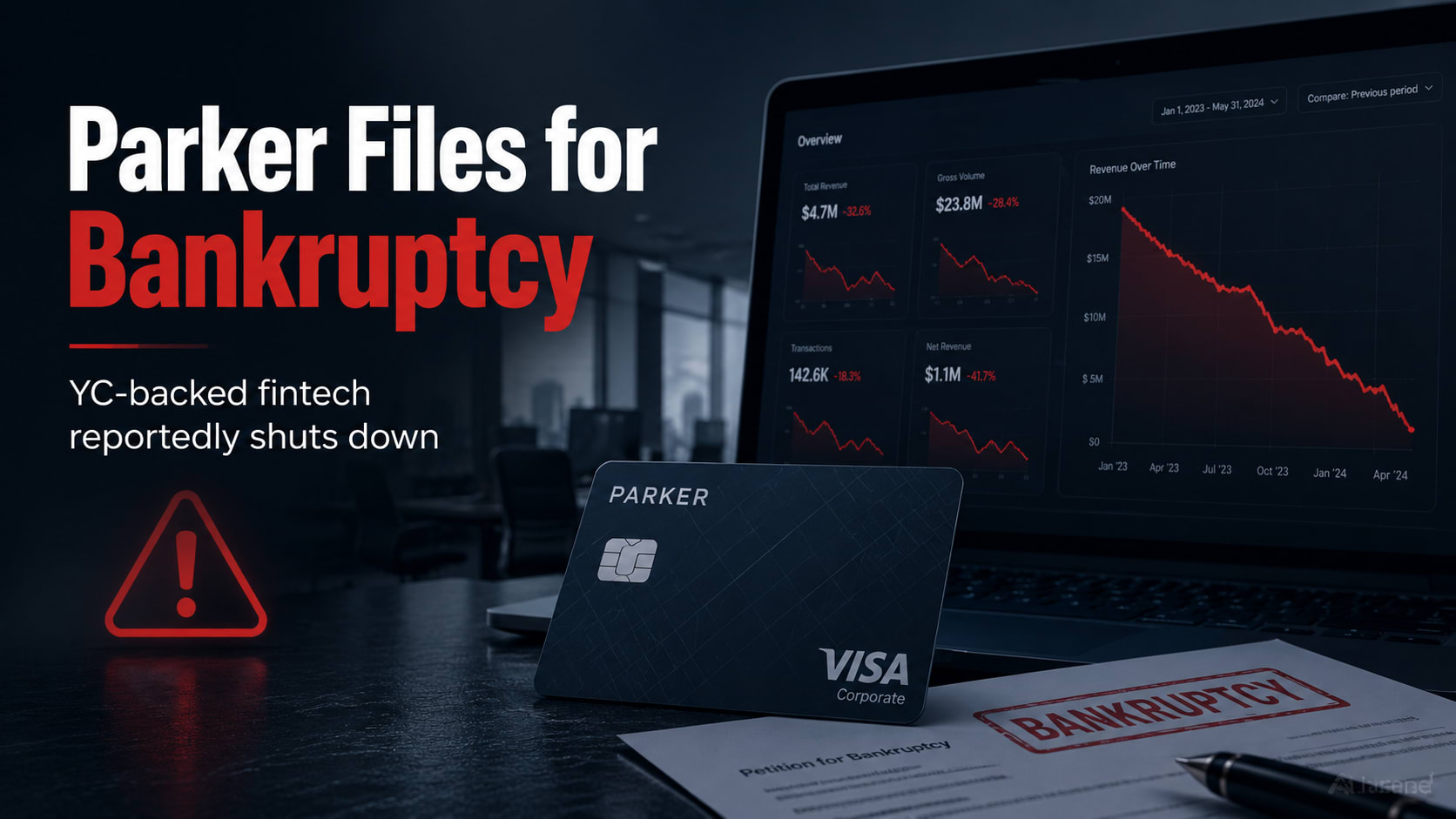
Parker, a venture-backed fintech startup that offered corporate credit cards and banking services for e-commerce businesses, has filed for Chapter 7 bankruptcy after reports that the company abruptly shut down operations. The filing marks a sharp reversal for a startup that had positioned itself as a modern financial platform for online merchants and claimed to have raised more than $200 million in total funding, including lending arrangements.
The bankruptcy filing, submitted on May 7, 2026, places Parker among the latest fintech companies to face severe pressure in a market where growth, credit risk, banking partnerships, and compliance oversight have become increasingly difficult to balance. According to reports, Parker listed assets between $50 million and $100 million, with liabilities in the same range, and between 100 and 199 creditors.
A Fintech Built for E-Commerce Operators
Parker launched with a clear target market: e-commerce founders and online sellers who often struggle to access financial products designed around their business model. Traditional banks and credit providers may not always understand the cash-flow cycles of digital commerce, where inventory purchases, advertising spend, marketplace payouts, and seasonal demand can create uneven revenue patterns.
The company came out of stealth in 2023 with a corporate credit card product built specifically for e-commerce companies. Parker’s pitch centered on underwriting that could better evaluate online business cash flows, giving merchants access to credit that matched their operating needs. Its customer base reportedly included small and medium-sized businesses that used Parker for credit cards, treasury management, banking services, and bill pay tools.
Parker was part of Y Combinator’s Winter 2019 batch, giving it early credibility in the startup ecosystem. Its Series A round was led by Valar Ventures, a well-known investor in fintech companies. In 2023, reports said Parker had raised $31.1 million in Series A equity funding, in addition to seed funding and debt financing designed to support its credit card program.
From Funding Momentum to Chapter 7
The most striking part of Parker’s collapse is the contrast between its funding narrative and its bankruptcy status. Parker’s website reportedly remained live after the shutdown reports and continued to display messaging about more than $200 million in total funding. However, industry analysis indicates that a significant portion of that figure involved debt or lending facilities rather than pure equity capital.
That distinction matters. In fintech, debt facilities can help a company scale lending or card programs, but they do not provide the same flexibility as equity funding. A credit-focused startup may appear well-capitalized while still facing tight constraints if losses rise, customer repayment behavior weakens, funding partners pull back, or acquisition talks fail.
Parker did not file for Chapter 11 restructuring, which is often used when a company seeks to reorganize and continue operating. Instead, the company filed for Chapter 7, which generally signals liquidation. In a Chapter 7 process, a trustee typically oversees the sale of remaining assets and distribution of proceeds to creditors according to legal priority.
Customer Impact and Banking Partner Questions
Reports around Parker’s shutdown suggest that some customers may have learned of the company’s closure through communications from banking or card partners rather than from Parker itself. Social media posts cited by industry observers claimed that Patriot Bank, Parker’s credit card partner, notified customers that the program was shutting down. Parker also reportedly worked with Piermont Bank on banking or treasury management services.
For small business customers, an abrupt fintech shutdown can create immediate operational problems. E-commerce companies rely on stable payment methods for inventory, advertising, subscriptions, shipping, marketplace fees, and vendor payments. If a corporate card or banking platform suddenly stops functioning, business owners may need to move quickly to protect cash flow, export records, replace payment methods, and communicate with suppliers.
The situation also raises broader questions about oversight in banking-as-a-service and embedded finance. When a fintech company provides financial services through partner banks, customers may not always understand which entity holds deposits, issues cards, manages credit, or controls customer communication. That complexity can become especially important during a shutdown.
Fintech consultant Jason Mikula reported that Parker had been in acquisition discussions and suggested that the failure of those talks contributed to the company’s abrupt closure. He also raised concerns about the position of small business customers and the oversight responsibilities of Parker’s banking partners.
Why Parker’s Bankruptcy Matters for the Fintech Sector
Parker’s bankruptcy is not just a single-company failure. It reflects a larger shift in fintech, especially for startups offering credit products to small businesses. During the low-interest-rate venture boom, many fintech companies grew quickly by promising better user experience, faster underwriting, and industry-specific financial products. But the market has changed.
Credit is expensive to scale. Underwriting must be accurate. Fraud controls must be strong. Bank partnerships must be carefully managed. Customer support must remain reliable. And when a startup serves small businesses, the financial risk can become more volatile than expected.
The corporate card market is also highly competitive. Companies such as Ramp, Brex, and other business finance platforms have built strong positions by combining cards with expense management, accounting integrations, procurement tools, and automation. For a smaller startup, offering a differentiated credit card may not be enough unless the company can also maintain strong margins, reliable funding access, and durable customer trust.
Parker’s focus on e-commerce made strategic sense because online sellers have real financial pain points. However, e-commerce merchants can also face sudden revenue swings due to advertising costs, marketplace policy changes, inventory delays, chargebacks, and consumer demand shifts. A fintech underwriting model built for that market must absorb those risks while still satisfying banking partners, investors, and debt providers.
Lessons for E-Commerce Founders
Parker’s collapse is a reminder that business owners should carefully evaluate the financial platforms they depend on. Modern fintech tools can be faster and easier to use than traditional banking products, but convenience should be balanced with risk management.
E-commerce operators should avoid relying on a single corporate card or banking provider for all mission-critical payments. They should regularly export statements, maintain backup payment methods, understand where funds are held, and monitor communications from both fintech platforms and partner banks. When a provider depends on a bank sponsor, customers should also understand which institution is responsible for the actual banking or card product.
The bankruptcy also highlights the importance of separating marketing claims from financial durability. A startup may advertise large funding numbers, but customers should consider whether that funding is equity, debt, a credit facility, or a combination of all three. In credit-based fintech, large lending arrangements may support growth, but they can also create pressure if business performance weakens.
The Road Ahead
As of the latest reports, Parker’s website remained active and the company had not prominently posted a shutdown notice there. Parker’s CEO, Yacine Sibous, had not explicitly acknowledged the bankruptcy or shutdown on LinkedIn, though he reportedly referenced the company’s funding and revenue milestones while reflecting on lessons learned. TechCrunch also reported that Parker did not immediately respond to a request for comment.
For the fintech industry, Parker’s Chapter 7 filing is another warning that strong investors, accelerator pedigree, and large funding claims do not guarantee survival. The next phase of embedded finance will likely require stronger transparency, better customer communication, tighter partner-bank oversight, and more sustainable credit economics.
For e-commerce businesses, the immediate lesson is practical: financial infrastructure should never depend on one provider alone. Parker’s fall shows how quickly a promising fintech platform can move from growth story to bankruptcy case, leaving customers, creditors, investors, and banking partners to manage the consequences.




Comments
No comments yet. Be the first to share your thoughts!
Leave a Comment