

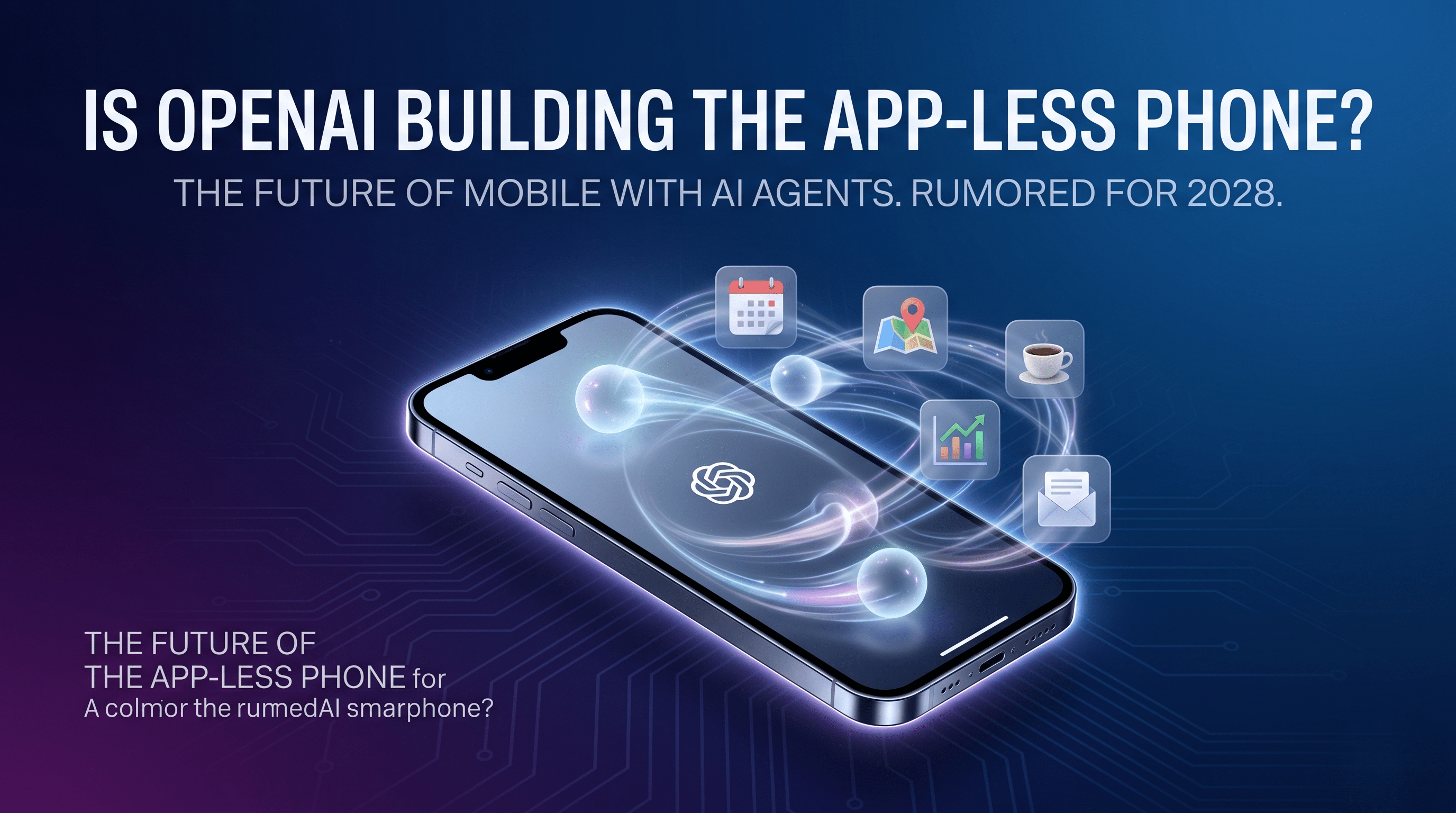
The End of the App Era? Inside OpenAI’s Master Plan for a Revolutionary AI Smartphone
For over a decade, the American tech consumer has been locked into a familiar, rigid paradigm: the Apple iOS and Google Android duopoly. We download applications from walled-garden stores, we constantly switch between grids of glowing icons, and we navigate complex menus to get simple things done. But what if the future of mobile technology doesn't revolve around apps at all? What if your pocket device simply understood your intent, your schedule, and your life context, and just executed tasks for you autonomously?
Recent industry whispers suggest that this science-fiction reality is much closer than we think. OpenAI, the Silicon Valley titan behind the cultural phenomenon that is ChatGPT, is reportedly eyeing a massive leap into consumer hardware. While early rumors pointed strictly to a pair of smart earbuds, a newly surfaced report from a highly respected supply chain analyst suggests something far more ambitious: a fully-fledged OpenAI smartphone built from the ground up to replace traditional apps with proactive AI agents.
Here is a deep-dive report into what we know about OpenAI's hardware ambitions, the heavyweights building it, and why it might change how we interact with technology forever.
Assembling the Hardware Heavyweights
Ming-Chi Kuo, a prominent industry analyst famous for his eerily accurate predictions regarding Apple’s closely guarded hardware pipeline, recently published a bombshell note that sent ripples through the consumer electronics industry. According to Kuo, OpenAI is not just theorizing about a phone; they are actively assembling an "Avengers-style" team of the global tech manufacturing world to build it.
The report indicates that OpenAI is collaborating with semiconductor giants MediaTek and Qualcomm to develop a bespoke, AI-first smartphone chip. This is a critical and incredibly strategic detail. Qualcomm, based in San Diego, California, is the reigning champion of mobile processing in the American Android market. Partnering with them ensures that OpenAI's upcoming device will have the massive computational horsepower required to run complex neural networks locally in your pocket.
Furthermore, Luxshare—a massive manufacturer globally recognized for assembling premium Apple products—is reportedly on board as a co-design and manufacturing partner. By tapping into Luxshare’s immense production capabilities, OpenAI is signaling that this isn't just a niche conceptual project or a limited-run novelty for developers. They are aiming for massive consumer scale.
With ChatGPT currently nearing an astonishing one billion weekly users globally, OpenAI already has a highly engaged, massive user base ready to transition from a browser window to a dedicated physical device.
Killing the Walled Garden: The "App-Less" Revolution
Perhaps the most disruptive element of Kuo’s report is the fundamental philosophy driving the device: the total death of the traditional application.
Currently, tech behemoths like Apple and Google completely control the app pipeline. They dictate the rules, manage system access, and take a hefty cut of the profits. More importantly for an artificial intelligence company like OpenAI, these gatekeepers strictly limit how deeply third-party AI can integrate with a phone's core operating system. An iOS app can only do what Apple explicitly allows it to do.
Kuo suggests that by creating its own smartphone and proprietary hardware stack, OpenAI will break free from these frustrating restrictions. Instead of tapping a banking app to check your balance, then opening a weather app, and finally opening a separate travel app to book a flight, you would simply speak to the phone’s native AI agent: "Plan my weekend trip to New York, pack an itinerary based on the weather, and ensure my total budget stays under $1,000." The AI agent would seamlessly navigate the necessary web services and execute the tasks autonomously in the background.
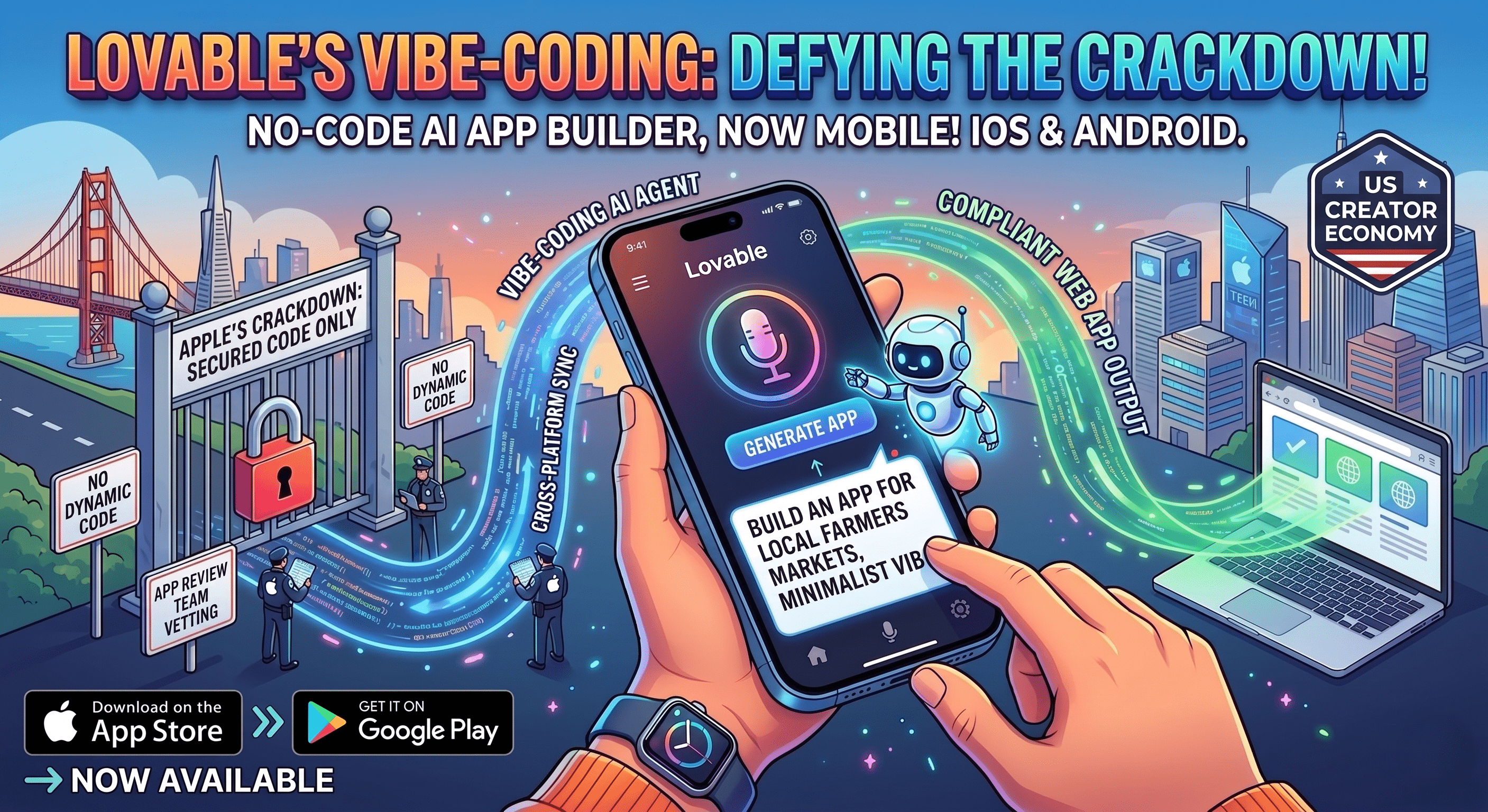
This "app-less" vision is gaining serious traction among tech visionaries across the United States. Creators behind "vibe coding" applications are actively predicting a future where traditional software interfaces become entirely obsolete. Even Carl Pei, CEO of the hype-driven tech brand Nothing, recently stated at the SXSW festival in Austin, Texas, that apps as we know them will eventually disappear. OpenAI seems perfectly positioned to be the executioner of the app era.
Contextual Awareness and the Data Goldmine
To make an app-less phone function seamlessly, the device needs to know you intimately. Kuo’s note emphasizes that OpenAI’s smartphone will be specifically designed to continuously understand the user's real-time context.
Imagine a smartphone that knows you are driving your usual route to work, recognizes a massive traffic delay via GPS, automatically drafts and sends an email to your boss explaining your tardiness, and pre-orders your usual Starbucks coffee to a store along the new detour route—all without you lifting a single finger.
By providing the actual physical hardware, OpenAI gains unprecedented, system-level access to a treasure trove of data regarding user habits, daily routines, locations, and preferences. This is data that a mere third-party app installed on an iPhone could never legally or technically aggregate to such a complete degree.
To process this immense volume of contextual data without draining the battery in two hours or compromising user privacy, the company plans to utilize a hybrid processing model. The phone will reportedly rely on a mixture of highly efficient, small on-device AI models for immediate, privacy-sensitive tasks, while offloading the heavy-lifting, complex requests to OpenAI’s massive cloud-based server infrastructure. This careful balance between on-device and cloud processing will be crucial for convincing privacy-conscious Americans that their constant AI companion is secure.
The Roadmap: Earbuds in 2026, Smartphones in 2028
So, when can you actually walk into a Best Buy or order this revolutionary device online? You will have to practice some patience, as building a new smartphone ecosystem from scratch takes time.
According to Kuo's industry analysis, the exact hardware specifications and component supplier contracts for the smartphone are expected to be finalized by the end of this year, or at the latest, the first quarter of 2027. Mass production of the actual OpenAI smartphone is not slated to begin until 2028.
However, the OpenAI consumer hardware rollout will begin much sooner than that. Earlier this year, Chris Lehane, OpenAI’s Chief Global Affairs Officer, publicly confirmed that the company is on track to announce its very first hardware product in the second half of 2026. Multiple credible reports indicate that this initial launch will likely be a pair of uniquely designed, highly advanced AI earbuds.
These earbuds will serve as the perfect "Trojan horse" for the company. They will allow OpenAI to test the American consumer's appetite for an always-listening, audio-first AI interface before rolling out the infinitely more complex and expensive smartphone ecosystem two years later.
As of this writing, OpenAI’s public relations team has declined to officially comment on these specific smartphone rumors.
Final Thoughts
Whether we are truly witnessing the final, twilight days of the App Store era remains to be seen. Consumer habits are notoriously difficult to break, and convincing the public to abandon their familiar iPhone and Galaxy screens will be the tech challenge of the decade. But one thing is absolutely clear: the race for the next great consumer computing platform has officially begun, and the mobile market is about to experience its biggest structural shake-up since Steve Jobs unveiled the original iPhone in 2007.
The future isn't just smart; it's autonomous. And it might just fit right in your pocket.
Comments
No comments yet. Be the first to share your thoughts!
Leave a Comment