Lovable Launches Vibe-Coding Mobile App: How It Successfully Navigated Apple’s AI Crackdown
The landscape of software development in the United States is undergoing a radical transformation. As the creator economy booms from Silicon Valley to the tech hubs of Austin and New York City, the demand for accessible, no-code solutions has never been higher. Amidst this massive shift, Lovable has officially launched its highly anticipated vibe-coding application, now available for download on both Apple’s iOS App Store and the Google Play Store.
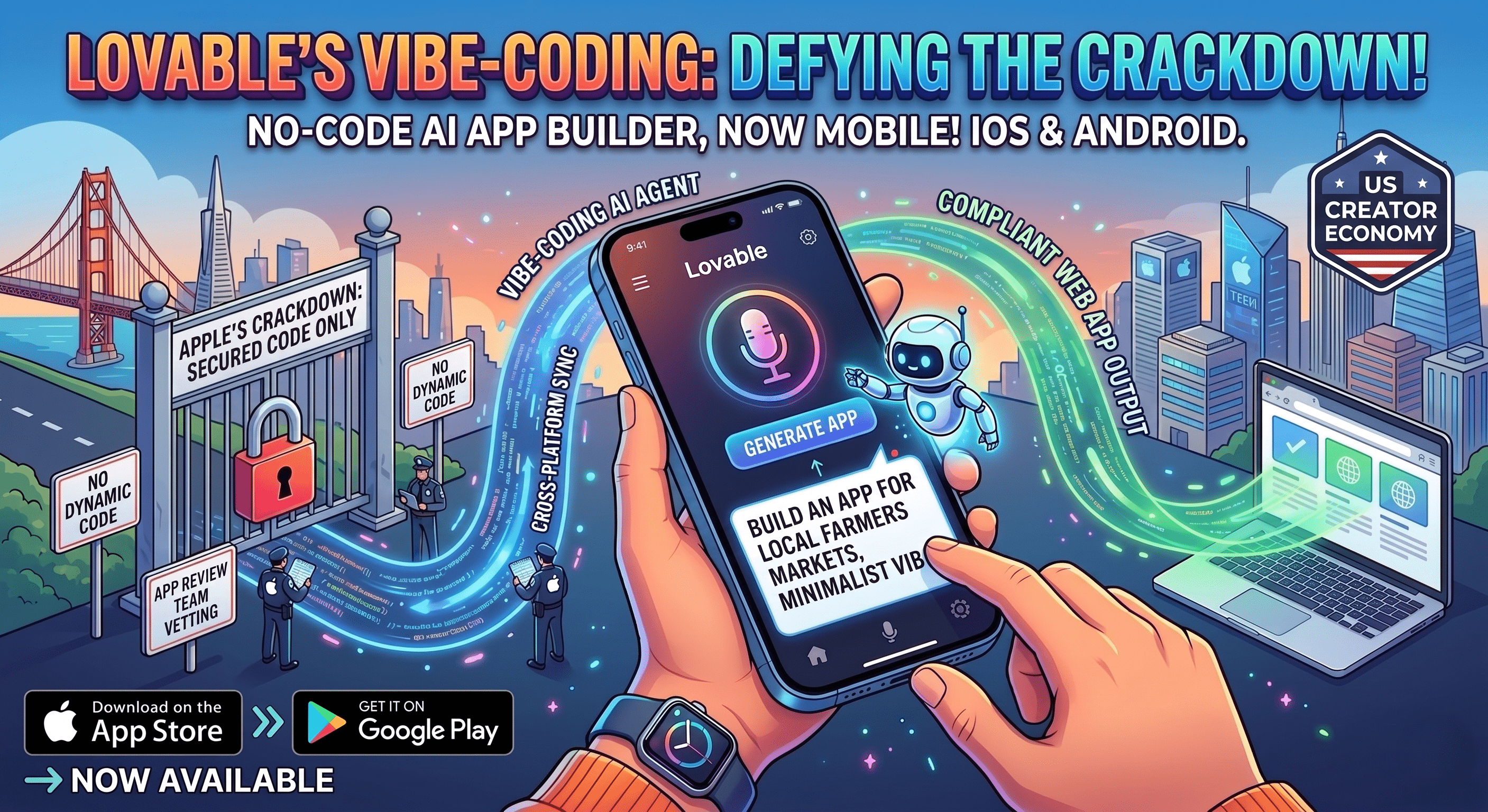
What makes this launch particularly newsworthy is the timing. Lovable's successful deployment arrives directly on the heels of Apple’s stringent and highly publicized crackdown on similar vibe-coding platforms. Despite the regulatory hurdles that tripped up several major competitors, Lovable has managed to thread the needle, delivering a powerful AI app builder directly into the pockets of American creators, entrepreneurs, and developers.
Here is a comprehensive report on how Lovable is reshaping mobile-first software development, the mechanics behind Apple's strict developer guidelines, and what this means for the future of the no-code movement in the US market.
The Vibe-Coding Phenomenon and Lovable’s Mobile Strategy
For those unfamiliar with the latest Silicon Valley lexicon, "vibe-coding" refers to the process of building software applications through natural language processing and AI agents. Instead of writing traditional lines of syntax in Python, Swift, or JavaScript, users simply describe the "vibe" or functionality of the app they want to build using everyday English. The AI handles the complex backend architecture, rendering the user's vision into functional code.
Lovable’s new mobile app is specifically pitched to would-be app builders who live active, on-the-go lifestyles. The core value proposition is simple but revolutionary: you no longer need to be tethered to a desktop computer to build software.
Key Features of the Lovable Mobile App
The application brings a robust suite of desktop-grade AI tools to the mobile environment, heavily optimized for the modern American workflow:
- Voice-to-Code and Text Prompts: Lovable allows users to initiate the coding process via straightforward voice commands or text inputs. Whether you are commuting on the subway, stuck in Los Angeles traffic, or brainstorming in a coffee shop, you can capture and execute your ideas the exact moment they pop into your head.
- Autonomous AI Agents: Once the user inputs their prompt, Lovable’s autonomous agent takes over. It runs in the background, writing code, structuring databases, and designing user interfaces without requiring constant human hand-holding.
- Seamless Cross-Device Synchronization: Lovable understands that complex projects eventually require a larger screen. The platform allows users to flawlessly switch back and forth between their mobile phone and their desktop computer. You can start a build on your iPhone during your morning commute and pick up exactly where you left off on your Mac or PC at the office.
- Real-Time Build Notifications: The app keeps users engaged by sending push notifications the moment a specific build or feature is ready for human review, dramatically speeding up the iteration cycle.
The Elephant in the Room: Apple’s App Store Crackdown
To fully appreciate Lovable's launch, one must understand the current regulatory climate of the iOS ecosystem. Just weeks prior to Lovable's debut, Apple initiated a significant crackdown on vibe-coding applications, sending shockwaves through the US developer community.
Tech giants and popular vibe-coding tools, including Replit and Vibecode, found themselves squarely in Apple's crosshairs. Apple actively blocked updates for these applications, citing direct violations of its stringent App Store Review Guidelines. Furthermore, Apple temporarily removed another prominent vibe-coding app, Anything, from the storefront entirely (though Anything was able to return earlier this month after making mandatory structural changes).
Why Did Apple Intervene?
At first glance, it appeared as though Apple was banning the concept of vibe-coding altogether. However, the reality is rooted in strict cybersecurity protocols and quality assurance standards.
Apple’s primary concern was not the AI generation of code, but rather how that code was being executed. The guidelines explicitly prohibit applications from downloading new, executable code or fundamentally changing their core functionality after they have been approved and downloaded by the user.
From Apple's perspective, allowing an app to generate and run brand-new, unvetted native code presents a massive security vulnerability for end-users. It creates a loophole where malicious software could theoretically bypass Apple’s App Review team. Because the App Review team cannot possibly vet code that an AI generates after the app is already on a user's device, Apple had to draw a hard line in the sand to protect its ecosystem.
How Lovable Mastered the Rules
This brings us to Lovable's strategic triumph. Rather than fighting Apple’s rigid ecosystem, Lovable adapted to it with a clever, fully compliant workaround that actually enhances the cross-platform nature of its product.
To comply with Apple’s non-negotiable security rules, vibe-coding apps can no longer run their newly generated applications natively inside the host app itself. Lovable recognized this limitation early in its development cycle. Instead of forcing a native iOS preview—which would trigger an automatic rejection from Apple—Lovable shifted the output environment entirely.
Lovable’s new app clearly touts its ability to turn user ideas into "working websites or web apps." By moving the app previews and the final generated products into standard web browsers (like Safari or Chrome), Lovable completely bypasses the security risks associated with downloading dynamic native code.
Because web apps operate within the secure sandbox of a mobile browser, Apple’s security concerns are nullified. This pivot not only ensured Lovable’s smooth approval on both the App Store and Google Play Store, but it also aligned perfectly with the growing US market trend toward Progressive Web Apps (PWAs), which are cheaper to host, easier to share, and universally accessible across any operating system.
The Future of AI Development in the US
Lovable’s successful launch serves as a masterclass in agile product development and regulatory navigation. For the thousands of American entrepreneurs, small business owners, and creative thinkers who lack formal computer science degrees, this app represents a leveling of the playing field.
The fact that Apple's crackdown did not stifle innovation, but rather redirected it toward safer, web-based outputs, is a positive sign for the industry. Lovable has proven that you can still build powerful, autonomous, vibe-coded software entirely from your smartphone—you just have to play by the rules. As the AI arms race continues to heat up across the United States, Lovable has officially positioned itself at the vanguard of the mobile no-code revolutio
Comments
No comments yet. Be the first to share your thoughts!
Leave a Comment