


Apple’s iOS 27 Could Turn the iPhone Into a Multi-Model AI Platform
Apple is reportedly preparing one of its most flexible artificial intelligence updates yet with iOS 27, a release that could give iPhone users more control over the AI models powering their everyday experiences. According to the report, Apple is working on a new internal feature called “Extensions”, designed to let users access generative AI capabilities from third-party large language models directly through Apple Intelligence features.
This move could mark an important shift in Apple’s AI strategy. Instead of relying on one single model or building every artificial intelligence capability entirely in-house, Apple may allow users to choose from several AI models installed through apps. These models could support functions across Siri, Writing Tools, Image Playground, and other Apple Intelligence features. In practical terms, iPhone users may soon be able to decide which AI system best fits their needs, preferences, and privacy expectations.
A New Direction for Apple Intelligence
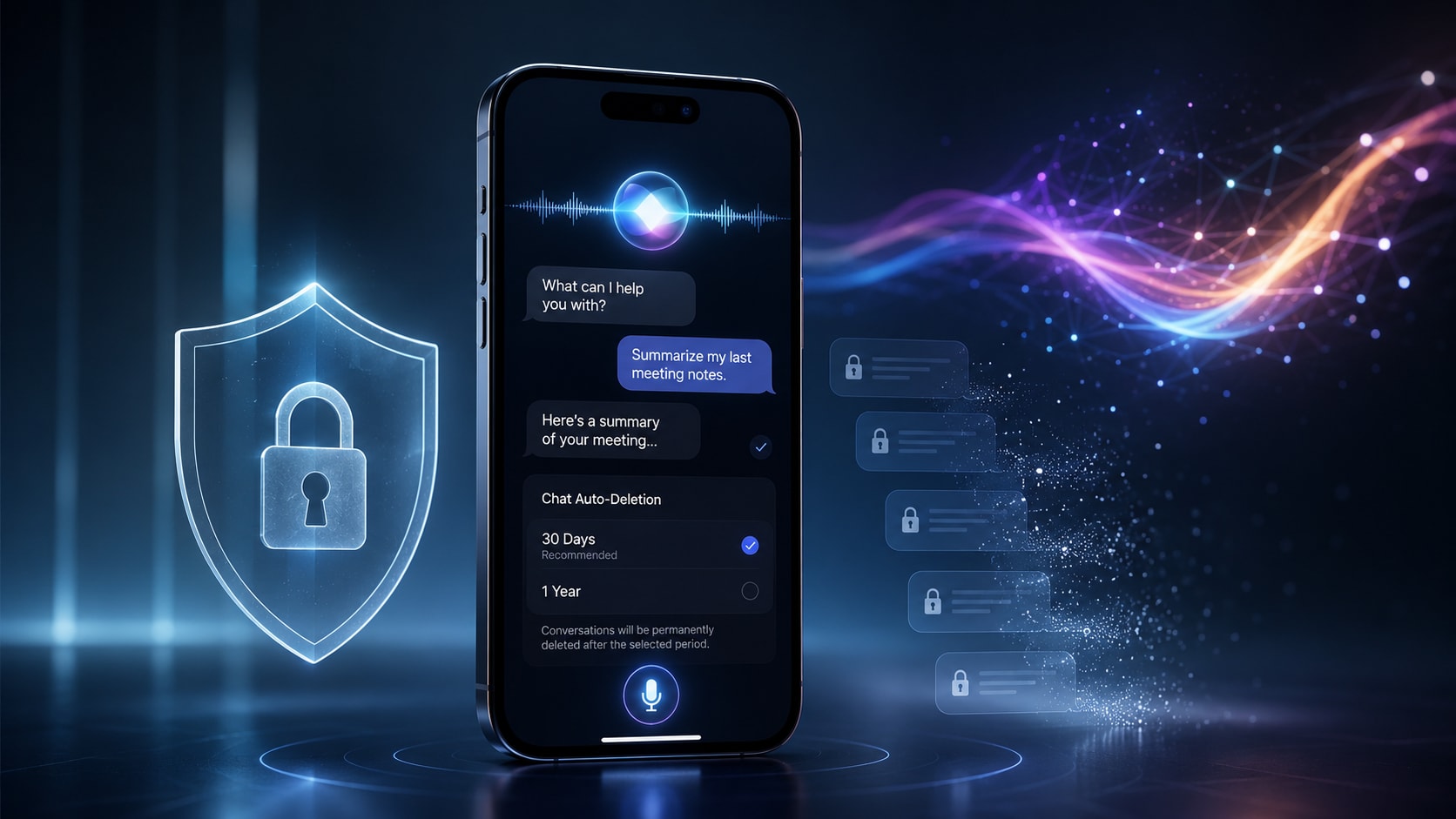
Apple Intelligence was introduced as Apple’s answer to the fast-growing demand for generative AI on consumer devices. While companies such as OpenAI, Google, Meta, Anthropic, and Microsoft have aggressively promoted AI chatbots, assistants, and cloud-based tools, Apple has taken a more careful and hardware-focused approach. The company has emphasized privacy, on-device processing, and integration with the Apple ecosystem rather than simply racing to launch standalone AI services.
With iOS 27, Apple appears to be expanding that strategy. The reported “Extensions” feature could allow installed apps to bring their own AI models into Apple’s system-level tools. This means users may not be limited to one default AI assistant or one external partner. Instead, the iPhone could become a more open AI environment where multiple models are available depending on the task.
For example, one model might be better suited for writing and summarizing text, while another may be stronger at image generation, coding assistance, reasoning, or personal productivity. If Apple successfully integrates these options into the operating system, users could experience artificial intelligence less as a separate app and more as a natural layer built into their device.
Third-Party AI Models Could Power Siri and More
The report suggests that Apple is currently testing models from Google and Anthropic. Google has been developing its Gemini family of AI models, while Anthropic is known for Claude, a model often associated with strong writing, analysis, and safety-focused design. The role of ChatGPT is less clear, although ChatGPT is already available as an option within Apple Intelligence features. Because of that existing relationship, it is reasonable to expect that OpenAI’s model could remain part of the available choices.
If Apple allows users to choose between models from OpenAI, Google, Anthropic, and possibly other AI companies, iOS 27 could become a major turning point for AI accessibility on smartphones. Rather than forcing users into one AI system, Apple may give them a “choose your own adventure” experience where the model depends on the user’s personal needs.
This would also make Siri more competitive. For years, Siri has been criticized for falling behind newer AI assistants that can understand context, generate detailed responses, and complete more complex tasks. By connecting Siri to advanced third-party models, Apple could improve the assistant without having to build every capability internally.
The same approach could benefit Writing Tools, which help users rewrite, proofread, summarize, and generate text. Image Playground could also become more powerful if users are able to access different image-generation models. For professionals, students, creators, and everyday users, this could make the iPhone a more capable productivity device.
iPadOS 27 and macOS 27 May Also Benefit
The reported feature is not expected to be limited to the iPhone. According to the same information, Apple may also bring this capability to iPadOS 27 and macOS 27. That would make sense because Apple’s AI strategy depends heavily on ecosystem integration. Many users move between iPhone, iPad, and Mac throughout the day, and AI tools become more valuable when they work consistently across devices.
On the iPad, third-party AI model access could support creative workflows, note-taking, research, document editing, and design. On the Mac, it could become even more important for professional tasks such as software development, long-form writing, business analysis, presentation creation, and content production.
If Apple can make AI model selection seamless across all three platforms, it may create a powerful advantage. Users would not simply be choosing an AI chatbot; they would be choosing an AI layer that follows them across their Apple devices.
Apple’s AI Strategy Is Different From Its Rivals
Apple is often described as being behind in artificial intelligence because it has not launched as many public AI tools as some of its competitors. However, that view may oversimplify the company’s strategy. Apple has a different business model from many AI-first companies. It does not need to sell access to a chatbot as its main product. Instead, Apple sells premium hardware, software experiences, and services.
That means Apple’s AI opportunity is closely tied to the iPhone, iPad, Mac, Apple Watch, and other devices. The company can use AI to make its existing products more useful, more personal, and more valuable. Rather than spending enormous sums to compete directly with every AI lab, Apple can partner with leading model providers while keeping control of the user experience.
This approach also fits Apple’s long-standing brand identity. Apple has historically entered major technology categories after competitors, then focused on design, usability, privacy, and ecosystem integration. The company did not invent the smartphone, tablet, smartwatch, or wireless earbuds, but it helped define the mainstream version of each product. With AI, Apple may be trying to do something similar.
Leadership Changes Could Shape Apple’s AI Future
The original report also connects Apple’s AI direction to a major leadership transition, noting that long-serving CEO Tim Cook is expected to step down soon and that John Ternus is positioned as the incoming top executive. If this leadership shift happens, Apple’s future AI strategy may become one of the most important responsibilities for the next CEO.
Artificial intelligence is no longer a side feature in consumer technology. It is becoming central to search, productivity, creativity, software development, communication, and personal computing. For Apple, the challenge is not only to catch up with competitors but also to define what AI should feel like inside a trusted consumer device.
John Ternus, known for his work on Apple hardware, would inherit a company whose future may depend on blending advanced AI with powerful devices. That could reinforce Apple’s hardware-first AI strategy. Instead of treating AI as a separate cloud service, Apple may continue turning the iPhone and Mac into intelligent personal computing platforms.
Why iOS 27 Could Matter for Users
For regular users, the biggest benefit of this reported change is choice. Some people may prefer one AI model because it writes better. Others may choose a model that feels safer, faster, more private, or more accurate for technical tasks. Businesses may want models that match their productivity tools. Creators may want models that produce better images or help with storytelling.
A multi-model approach could also reduce dependence on a single AI provider. If one model performs poorly for a certain task, users may be able to switch to another. This flexibility could make Apple Intelligence feel more useful and less restrictive.
It may also encourage competition among AI companies. If users can choose which model powers their Apple Intelligence experience, model providers will have an incentive to improve quality, speed, safety, and integration. Apple, meanwhile, can position itself as the platform where those models become accessible through familiar tools.
The Bigger Picture
iOS 27 could represent a major evolution in how artificial intelligence works on smartphones. Instead of making AI feel like a separate app, Apple may embed it into the operating system while allowing users to choose the model behind the experience. This could help Apple balance innovation, privacy, user control, and ecosystem consistency.
If the reported “Extensions” feature arrives as described, Apple’s AI future may not depend on building one model to beat every rival. Instead, the company could build the best environment for using many models. That would be a very Apple-like strategy: control the experience, simplify the interface, and let the technology disappear into the product.
For iPhone users, iOS 27 may become more than another software update. It could be the moment when the iPhone becomes a truly personalized AI device, shaped not by one assistant or one company, but by the user’s own choice of intelligent tools.

Comments
No comments yet. Be the first to share your thoughts!
Leave a Comment