

The Windows Insider Evolution: How Microsoft is Reshaping the Future of OS Testing
The landscape of Windows development is undergoing its most significant structural shift in years. For a long time, the feedback loop between Microsoft and its millions of global testers has been criticized for being overly complex, inconsistent, and at times, frustrating. Microsoft has officially acknowledged these growing pains, signaling a new era of transparency and efficiency with a total overhaul of the Windows Insider Program.
This transformation isn't just a rebranding exercise; it is a fundamental shift in how the company approaches "Windows quality." Following a recent commitment to improving the stability and reliability of its flagship operating system, Microsoft—via Principal Group Product Manager Alec Oot—has detailed a streamlined roadmap designed to make the testing process more predictable for enthusiasts and IT professionals alike.
Moving Beyond the "Channel Maze"
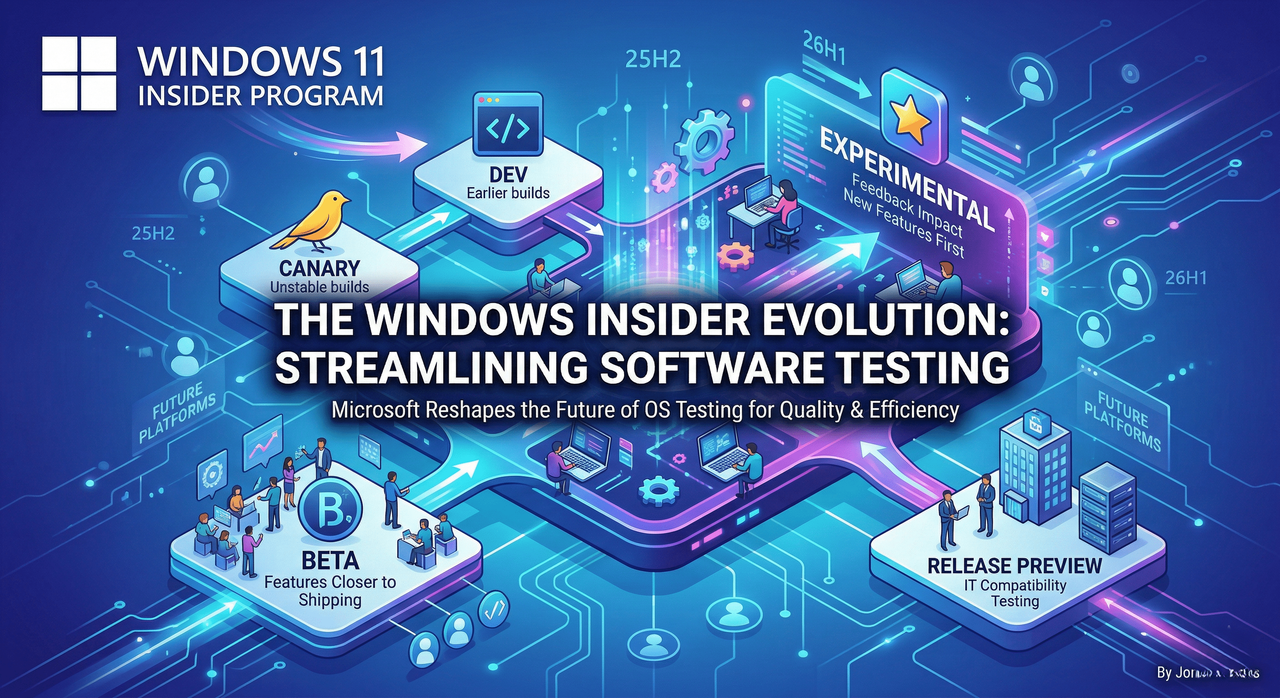
Since the reorganization in 2023, the Windows Insider Program has operated through four distinct channels: Canary, Dev, Beta, and Release Preview. While this was intended to provide a gradient of stability, the reality for many users was a confusing "maze" of builds where features would appear in one channel but not another, often without clear logic.
Microsoft’s new strategy consolidates this structure to reduce friction. The headline change is the merging of the Canary and Dev channels into a single, unified Experimental Channel.
The Experimental Channel: The Core of Innovation
The Experimental Channel is now positioned as the primary forge for Windows innovation. According to Microsoft, this is where new features will debut first, allowing for the most direct impact from user feedback. By merging the two most volatile channels, Microsoft aims to centralize the early-stage development process, ensuring that "bleeding edge" testers are all working within the same ecosystem.
The Beta Channel: The Stability Standard
For those who want to see the future of Windows without the risk of system-breaking bugs, the Beta Channel remains the "sweet spot." It is designed for features that are closer to their final shipping state. While it mirrors the previous Beta Channel in name, its functionality is being upgraded to ensure a more consistent experience—a move specifically aimed at addressing the "missing feature" complaints that have plagued the program for years.
Technical Segmentation: 25H2, 26H1, and Future Platforms
One of the more complex aspects of this overhaul is how Microsoft handles the underlying architecture of Windows. The new program recognizes that not all hardware is moving at the same pace.
Both the Experimental and Beta channels will now include specific toggles allowing users to select their baseline version of Windows:
- Version 26H1: Primarily targeted at the new wave of Arm-based PCs and specialized hardware.
- Version 25H2: The standard baseline for the majority of x86/x64 systems currently in use.
Furthermore, for the most adventurous testers, the Experimental channel introduces a "Future Platforms" option. This is a decoupled testing environment that provides access to Microsoft’s earliest preview builds. These builds are not aligned with any specific retail version of Windows, providing a playground for features that may eventually become part of "Windows 11 26H2" or even a successor operating system.
Solving the "Controlled Feature Rollout" Frustration
Perhaps the most significant "quality of life" improvement in this announcement concerns how features are actually delivered to a user's machine. In the past, many Insiders would install a new build specifically to try a feature they read about in a blog post, only to find the feature was disabled on their specific device.
This was due to Controlled Feature Rollout (CFR)—a process where Microsoft would trickle out updates to small groups to monitor for bugs. While helpful for the general public, it was widely disliked by Insiders who felt they were "testing the testers."
Key Changes to Feature Delivery:
- Beta Channel Transparency: Microsoft is effectively turning off CFR for the Beta Channel. If a feature is announced in the official Windows Insider blog for a specific build, users who install that build will actually see the feature.
- Native Feature Flags: In the Experimental branch, Microsoft is introducing a native "Feature Flags Page" within the Windows settings. This essentially Sherlocks third-party tools like ViVeTool, allowing users to manually toggle specific experimental features on or off. This gives the power of choice back to the user, allowing them to force-enable features that Microsoft might still be A/B testing behind the scenes.
A Seamless Transition: The End of the "Clean Install" Requirement
Historically, moving between Windows Insider channels—or leaving the program entirely—was a technical headache. Often, it required a complete "wipe and load," where the user had to format their hard drive and reinstall Windows from scratch.
Microsoft is finally addressing this barrier to entry. The new system facilitates "in-place upgrades" for switching between Experimental, Beta, and Release Preview channels. As long as the user remains on the same "core version" (such as 25H2), they can move between tiers of stability without losing their personal data, apps, or settings. This makes the program significantly more accessible to casual users who may want to test a specific feature and then retreat to a more stable build once their curiosity is satisfied.
The Role of IT Professionals: The Advanced Release Preview
While the Experimental and Beta channels are the stars for enthusiasts, the Release Preview Channel is being repositioned as a specialized "Advanced" option. It will be hidden from the standard "get started" menu to prevent accidental enrollment by casual users.
This channel is now explicitly aimed at IT administrators and enterprise environments. It serves as the final gatekeeper, allowing businesses to perform compatibility testing on updates that are nearly identical to the final public release. By siloing this channel, Microsoft ensures that the feedback it receives here is focused on deployment and enterprise stability rather than UI experimentation.
What Happens Next? Migration Path for Current Users
Microsoft has confirmed that these changes will roll out over the "coming weeks." Current testers will be migrated automatically based on their existing builds:
- Dev Channel users will transition to the 25H2 version of the Experimental Channel.
- Canary users on the 28000 series builds will move to the 26H1 version of the Experimental Channel.
- Canary users on the 29500 series will be placed into the Experimental (Future Platforms) tier.
This reorganization represents a mature step forward for Microsoft. By listening to the community and reducing the friction of the testing process, they are not just fixing a program; they are rebuilding the trust required to develop a modern, high-quality operating system in the age of rapid AI integration and hardware diversification.


Comments
No comments yet. Be the first to share your thoughts!
Leave a Comment