

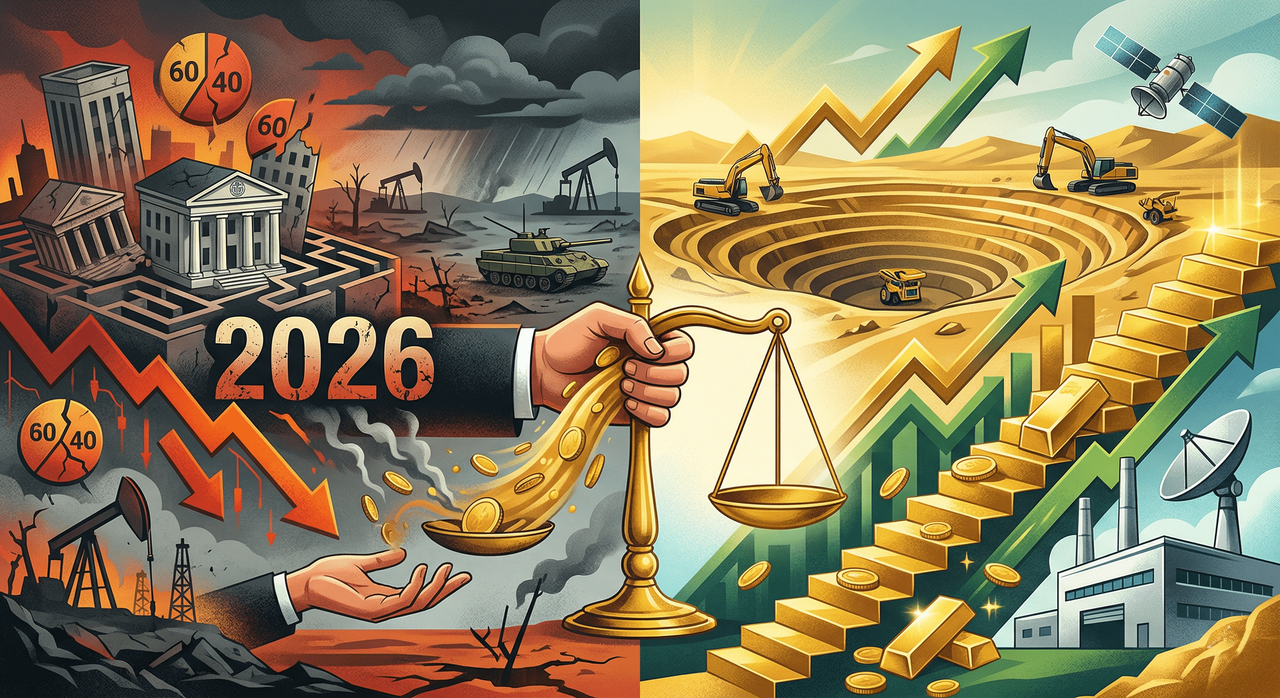
The 2026 Stagflation Trap: Why Smart Money is Pivoting to Gold and Defense
It is Friday, and while the "Thank God It’s Friday" sentiment is high, the global markets are giving investors very little reason to relax. As we navigate the second quarter of 2026, the economic landscape has shifted from "uncertain" to "decidedly volatile."
In a recent deep dive into the current state of global affairs, seasoned investor Clive Thompson laid out a roadmap of the challenges currently destroying traditional wealth. From the ongoing fallout of the Iran war to a Federal Reserve that finds itself backed into a corner, the "smart money" is no longer sitting still. Here is a comprehensive report on the shifting tides of the 2026 economy and a massive development in the gold mining sector that could redefine portfolios this year.
The Inflation Surge: CPI and the Fed’s Impossible Choice
The biggest headline today revolves around the March Consumer Price Index (CPI). In February, inflation sat at a manageable 2.4%. However, market estimates for today’s announcement are pegged at a staggering 3.3%.
A month-on-month jump of 0.9% isn't just a ripple; it’s a tidal wave. While the government often attempts to pivot the narrative toward "Core CPI"—which conveniently excludes the very things people actually spend money on, like food and energy—even that index is expected to climb from 2.5% to 2.7%.
The Federal Reserve's "Dead End"
The Federal Reserve currently finds itself trapped "between the devil and the deep blue sea." Standard economic theory dictates two moves:
- Raise rates to curb soaring inflation.
- Cut rates to stimulate a faltering economy.
The problem? They can do neither. Raising rates now would crush an already stagnating economy, while cutting them would send inflation into the stratosphere. This creates the perfect storm for stagflation—a term we expect to hear with exhausting frequency throughout the remainder of 2026.
Geopolitics: Oil, War, and the Hormuz Bottleneck
The Iran war continues to be the primary driver of market anxiety. Oil prices are stubbornly holding above $90 a barrel, representing a 30% increase since the conflict began. While a fragile 13-day ceasefire is currently in place, the "opening" of the Strait of Hormuz is largely symbolic.
Reports indicate that while the strait is technically open, traffic has plummeted from hundreds of ships per day to just five. This is largely due to exorbitant passage fees being levied—rumored to be in the millions of dollars per vessel—rendering most commercial transit unprofitable. Until the energy corridors truly stabilize, the floor for oil prices remains dangerously high.
The Death of the 60/40 Portfolio
For decades, the 60% equities and 40% bonds split was the "gold standard" for balanced investing. In 2026, this strategy is officially struggling.
- The Equity Side: In a stagnating economy, growth is hard to find. Stocks aren't necessarily crashing, but they are "struggling on the way up."
- The Bond Side: This is where the real danger lies. As inflation rises, the real return on bonds turns negative. If yields rise to match inflation, the nominal value of the bonds drops.
The Math of Loss: If a 10-year bond yield rises by just 0.5%, the holder loses approximately 5% of the bond's value immediately.
In this environment, the 60/40 portfolio is effectively moving backward. Investors are beginning to look toward a 60/20/20 split, introducing a 20% allocation to gold to provide the "firepower" bonds no longer offer.
Tech and AI: A "Shakeout" on the Horizon?
The technology sector remains expensive, and perhaps overvalued. Michael Burry, famous for "The Big Short," recently signaled trouble for AI darlings like Palantir, suggesting that competitors like Anthropic are beginning to "eat their lunch."
While demand for AI is skyrocketing, the business models are under scrutiny. Many high-tech companies are currently selling their end products below cost, relying on endless rounds of venture capital. As the cost of capital remains high, we expect a massive shakeout where only a few profitable survivors remain.
The Gold Mining Story: Barrick’s Massive Pivot
Despite the gloom in tech and bonds, there is a "bright light" in the gold sector. Barrick Gold, one of the world’s largest miners, has announced a transformative strategy to unlock shareholder value.
The North American Spin-off (NEWCO)
Barrick is moving to spin off its massive North American assets into a new entity, currently referred to as "NEWCO" (though likely to be named North American Barrick). This new company will center around the Nevada Gold Mines, arguably the most attractive gold jurisdiction globally.
| Key Metric (Barrick Gold 2025) | Performance |
| Full-Year Earnings Growth | +133% |
| Quarterly Dividend Increase | +140% |
| Primary Asset Focus | Low-risk Jurisdictions (USA/Canada) |
Why This Matters
By spinning off these premium assets, Barrick achieves two things:
- De-risking: It separates its "safe" North American operations from its more volatile assets in regions like Mali or Pakistan.
- Liquidity for Acquisitions: The IPO of the North American entity will provide Barrick with a massive "war chest" of cash.
With this capital, Barrick is expected to go on an acquisition spree, targeting junior miners with high reserves in safe countries. For investors, this makes almost any gold mining company in a stable jurisdiction a potential acquisition target.
Strategic Recommendations for a Stagflationary Era
Navigating 2026 requires a departure from "business as usual." While the following should not be taken as formal investment advice, the trend lines suggest a shift into the following sectors:
- Energy and Commodities: Specifically companies involved in oil, sulfur, copper, and fertilizer.
- Defense Contractors: As global tensions remain high, defense spending is unlikely to cool.
- Inflation-Protected Securities: TIPS (US) or Index-linked Gilts (UK).
- Gold and Hard Assets: Not just as a hedge, but as a primary growth driver during the Barrick-led M&A wave.
- Strategic Cash: While cash is a depreciating asset due to printing, keeping some "firepower" on the sidelines allows you to buy the dip when the tech shakeout eventually occurs.
Final Thoughts
The world in April 2026 is complex. The Iran war and the Fed's paralysis have created a difficult environment for traditional portfolios. However, the restructuring of the gold industry—led by Barrick’s bold North American move—offers a rare opportunity for value creation.
As we head into the weekend, the message is clear: diversify away from the "trap" of bonds and overpriced tech, and look toward the sectors that provide real-world utility and "safe haven" status.
Disclaimer: The insights provided in this report are based on the market analysis of Clive Thompson and current 2026 economic data. This article does not constitute financial advice. Investors should conduct their own due diligence or consult with a certified financial advisor before making any investment decisions.



Comments
No comments yet. Be the first to share your thoughts!
Leave a Comment