The AI Revolution Accelerates: A Comprehensive Weekly Report on the Evolving Landscape of 2026
The pace of innovation in artificial intelligence has moved from a steady stream to a torrential downpour. In a week characterized by massive UI overhauls and the launch of specialized reasoning models, the industry’s giants—OpenAI, Google, Anthropic, and Perplexity—have all signaled a shift toward Agentic AI. For tech professionals and developers, especially those operating within emerging tech hubs like Casablanca, these updates represent a fundamental change in how we interact with hardware and code.
This report synthesizes the most critical breakthroughs of the week, analyzing their implications for productivity, software development, and the future of scientific research.
OpenAI’s Codex: The Emergence of the AI 'Super App'
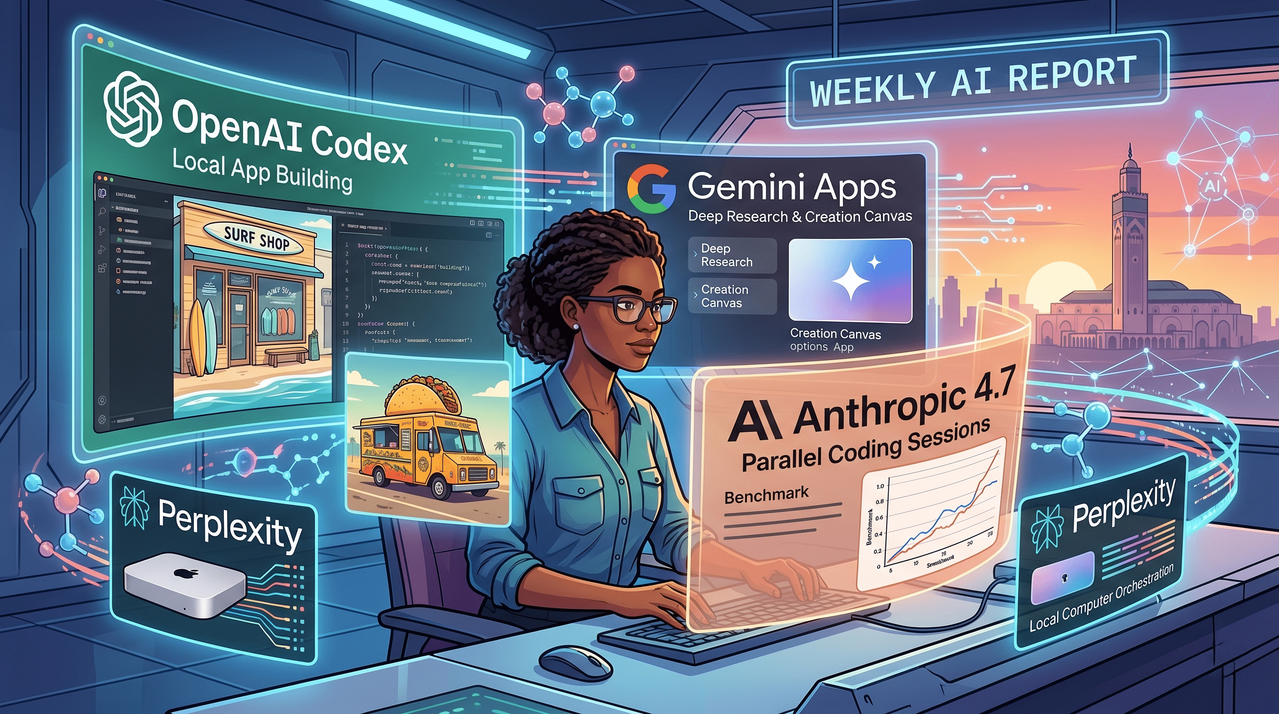
One of the most significant shifts this week came from OpenAI with the latest update to the Codex desktop application. It is becoming increasingly clear that OpenAI is positioning Codex as their version of a "super app"—a unified platform where image generation, code execution, and computer navigation converge.
The standout feature is background computer use. Unlike previous iterations where the AI would effectively hijack the user’s cursor, the new Codex can operate in parallel. It can see, click, and type within its own environment while the user continues working in other applications.
Key Functional Enhancements:
- Multimodal Integration: Users can now generate images using GPT-Image 1.5 directly within the IDE. This allows for rapid prototyping, such as generating a website mockup and immediately instructing the AI to build the frontend based on that visual.
- Contextual UI Interaction: Through a new "comment mode," developers can highlight specific sections of a web preview and provide natural language instructions to modify elements, such as adding themes or logos in real-time.
- Local App Deployment: Tests demonstrated Codex's ability to build, compile, and run local macOS applications (like a desktop Connect 4 game) and then—crucially—test the user experience by playing the game against itself to report bugs.
Anthropic’s Claude Opus 4.7: A New Benchmark for Coders
Anthropic continues to lead the charge in specialized software engineering models. This week saw the release of Claude Opus 4.7, a model that serves as a bridge between the previous 4.6 version and the highly anticipated (but restricted) Mythos preview.
In terms of benchmarks, Opus 4.7 shows a substantial leap in Agentic Coding tasks. While the Mythos model scored an unprecedented 77.8% on the SWE-bench Pro, Opus 4.7 comfortably sits at 64.3%, significantly outperforming GPT-5.4 and previous Claude iterations. For developers, this means a model that requires less "prompt engineering" and exhibits a deeper understanding of complex instruction following.
Furthermore, the Claude desktop app now supports parallel sessions, allowing developers to kick off tasks across multiple repositories simultaneously. With an integrated terminal and in-app file editor, the need for a separate Command Line Interface (CLI) is rapidly diminishing for routine AI-assisted development.
Google’s Ecosystem Integration: Gemini Everywhere
Google has prioritized accessibility this week by launching the Gemini desktop app for both Windows and Mac. This move ensures that the AI’s full suite of capabilities—including Image generation (Nano Banana), video (VO), and music creation—is no longer tethered to a browser tab.
Chrome "Skills" and Productivity
A transformative update for Chrome users is the introduction of Slash Commands. Much like the functionality found in Perplexity, users can now save their most effective prompts as "Skills." By typing a forward slash in the Gemini sidebar, these skills can be executed across any active tab. This is particularly useful for summarizing news, reviewing YouTube comments, or extracting data from technical documentation.
Gemini 3.1 Flash TTS
On the developer side, Google released the Gemini 3.1 Flash Text-to-Speech (TTS) model in Vertex AI. This model introduces emotive control, allowing developers to insert tags for whispers, laughter, or "panic mode" to create more human-centric voice interfaces.
The Shift to Local: Perplexity’s Personal Computer
Perplexity has introduced a "Personal Computer" feature that marks a departure from purely cloud-based agents. While the inference still happens on Perplexity’s servers, the system now has secure access to local files, native applications, and to-do lists. It can orchestrate workflows across iMessage, email, and the web to complete complex tasks autonomously. This is a direct competitor to the "OpenClaw" philosophy, focusing on a persistent, 24/7 machine presence that can be audited and reversed by the user.
AI in Specialized Domains: Science and Creativity
The week wasn't just about general-purpose assistants. Several models were released targeting specific industries:
- GPT-Rosalind (OpenAI): A reasoning model optimized for Life Sciences. It is designed for drug discovery, chemistry, and genomics. By outperforming standard models in experimental design and analysis, Rosalind represents the "noble" side of AI—moving beyond productivity to solving global health crises.
- Canva 2.0: The design giant announced upcoming features that allow users to "prompt anything into existence." Integration with Slack and Notion suggests a move toward automated marketing campaign generation.
- Midjourney 8.1: The latest update brings back the "iconic aesthetics" with native 2K HD rendering, operating at three times the speed of version 8.0.
Hardware and Robotics: The Whiteboard Test
Boston Dynamics provided a glimpse into the future of domestic robotics. Their latest demonstration showed a robot reading a handwritten to-do list from a physical whiteboard—tasks like recycling cans, organizing shoes, and putting away laundry—and executing them without digital intervention. This "vision-to-action" pipeline is a major milestone for integrating AI agents into the physical world.
Economic Sentiment: The Pivot of "New Bird"
In a move that sparked debate about the current "AI bubble," the footwear company Allbirds announced a pivot to becoming an AI infrastructure firm named New Bird AI, acquiring GPU assets to facilitate high-performance computing. Following the announcement, the company’s stock surged by 600%, highlighting the intense, and sometimes volatile, market enthusiasm for anything related to GPU clusters.
Final Thoughts: A Perspective for the Professional
For those of us navigating the technical landscape in Morocco, these updates are more than just international headlines. As we build FinTech platforms and educational tools, the arrival of local-first AI agents (like Perplexity’s PC) and high-performance coding models (like Opus 4.7) provides us with the leverage to compete on a global scale with smaller teams.
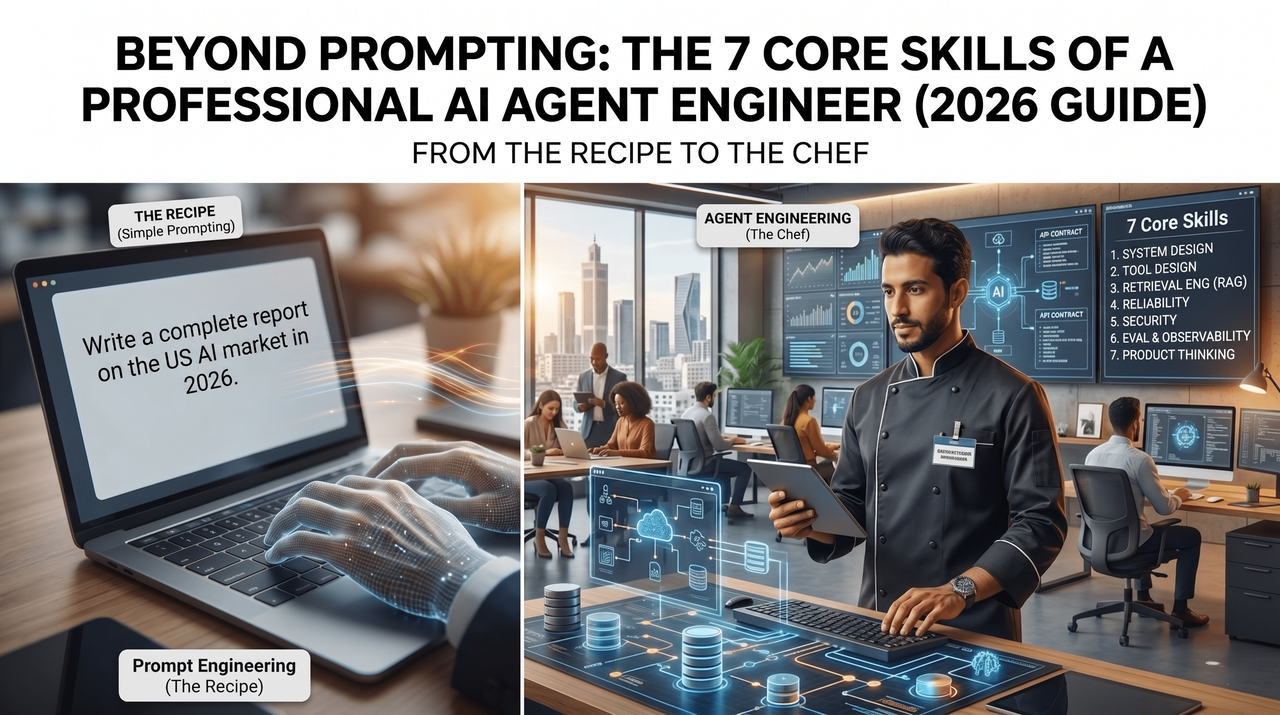
The "signal" in this week’s noise is clear: AI is moving off the chat screen and into our file systems, our IDEs, and even our physical spaces. The challenge is no longer just learning how to prompt, but learning how to manage a fleet of agents working in parallel.
Comments
No comments yet. Be the first to share your thoughts!
Leave a Comment