

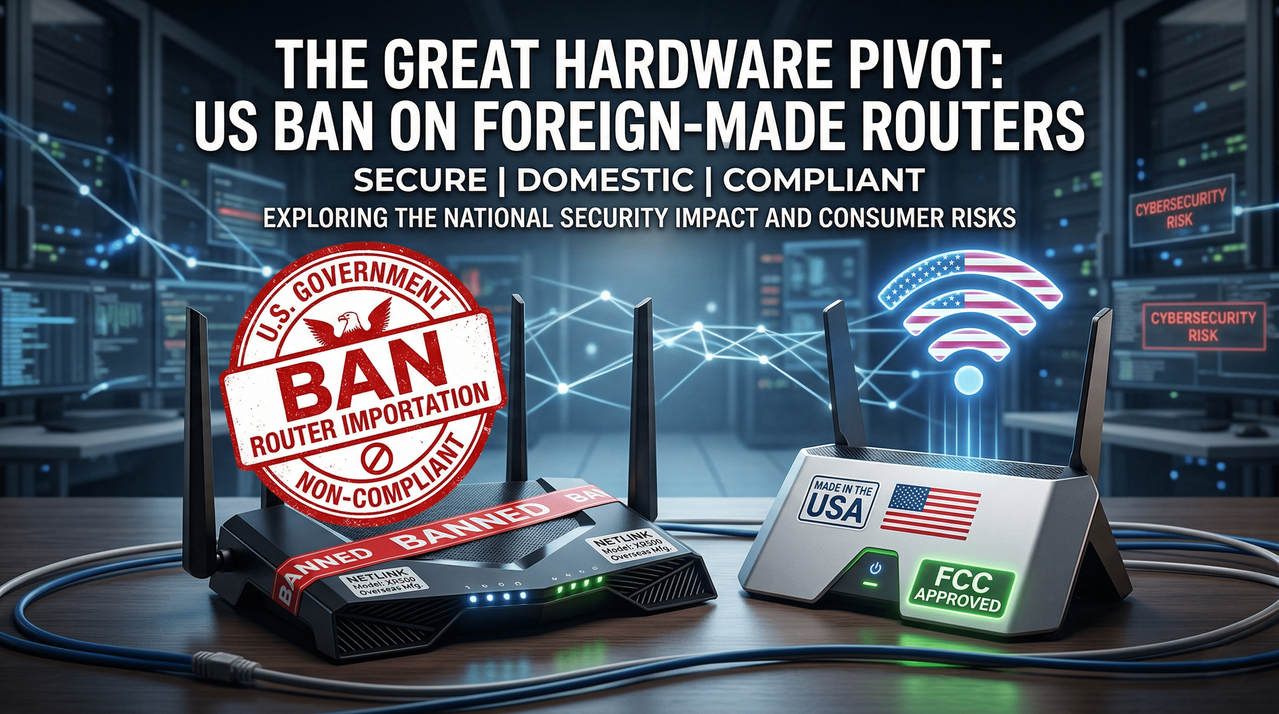
The Great Hardware Pivot: Understanding the US Ban on Foreign-Made Routers
In a move that has sent shockwaves through the global tech industry and left many casual internet users checking the labels on their hardware, the US government has officially pulled the plug on the import of foreign-made consumer routers. This isn't just another minor regulatory tweak or a temporary tariff; it’s a fundamental shift in how the United States views its digital borders.
For years, cybersecurity experts have whispered about "hardware backdoors" and supply chain vulnerabilities. As of 2026, those whispers have evolved into a full-scale federal mandate. If you’ve been keeping an eye on the news, you know the headlines, but the devil—as always—is in the technical and economic details.
The Core of the Mandate: Why Now?
The Executive Branch’s determination wasn't a sudden whim. It stems from a comprehensive review of the national digital infrastructure. According to the official determination, foreign-produced routers are no longer viewed merely as consumer electronics, but as potential entry points for systemic collapse.
The determination highlights two primary concerns:
- Supply Chain Vulnerability: The reliance on foreign manufacturing creates a "choke point" that could be used to disrupt the U.S. economy, critical infrastructure, and national defense.
- Immediate Cybersecurity Risks: There is an acute fear that these devices pose a risk that could be leveraged to immediately harm U.S. persons or disrupt essential services.
In plain English? The government is tired of worrying about who has the keys to the front door of your home network. By mandating that the "brain" of your house—the router—be under stricter domestic oversight, they hope to seal off a massive surface area for potential cyber-attacks.
The New FCC Gatekeeper: A Rigorous Path to Entry
If you’re a manufacturer looking to sell a new router in the US, the days of simple "plug and play" market entry are over. The Federal Communications Commission (FCC) has been granted a new role as the ultimate gatekeeper.
Under the new rules, any router manufactured outside the United States must undergo a rigorous conditional approval process. This isn't a simple rubber-stamp exercise. To even be considered for the American market, companies must now provide:
- Full Disclosure of Influence: Firms must reveal their foreign investors and any level of external political or corporate influence that could compromise the integrity of their hardware.
- A "Homecoming" Plan: This is perhaps the most radical part of the policy. To get conditional approval, manufacturers must present a concrete, time-bound plan to transition their manufacturing operations to U.S. soil.
Essentially, the US is saying: "You can sell here for now, but only if you promise to build here eventually."
The Role of Defense and Homeland Security
While the FCC handles the paperwork, the Department of Defense (DoD) and the Department of Homeland Security (DHS) hold the "exception" stamps. These agencies have the power to exempt specific hardware if they deem it safe. However, as of this writing, neither agency has added a single consumer router to the exception list. The bar for "acceptable" is currently set incredibly high.
Winners, Losers, and the "Netgear Dilemma"
This policy creates a fascinating—and stressful—landscape for established tech giants. Take Netgear, for example. For decades, Netgear has been a household name in American networking. They are a US-based company, headquartered in California, yet they manufacture the vast majority of their products abroad.
Under the new rules, Netgear faces a massive logistical mountain. Despite being "American," their hardware is subject to the ban because of where it is built, not where the corporate office is located. They, like many others, will have to decide whether to overhaul their entire global supply chain or risk losing their primary market.
On the other side of the coin, we see companies like SpaceX’s Starlink. Because Starlink's newer WiFi routers are already manufactured within the United States, they are positioned to capture a massive share of the market by default. They aren't just selling internet; they’re selling "compliance" and "peace of mind."
| Brand Type | Current Status | Impact of Ban |
| Domestic Manufacturers (e.g., Starlink) | US-Based / US-Made | High Growth: Immediate market advantage. |
| Hybrid Firms (e.g., Netgear) | US-Based / Foreign-Made | High Risk: Must pivot manufacturing or face import bans. |
| Foreign Giants (e.g., TP-Link) | Foreign-Based / Foreign-Made | Critical Risk: Near-impossible path to market without major restructuring. |
The Cost of Security: Who Pays?
Let's address the elephant in the room: Price.
There is a reason your current router was likely made in China or Taiwan. The labor costs, established component ecosystems, and economies of scale in those regions are unmatched. Bringing that manufacturing to the US is a noble security goal, but it is an expensive one.
Domestic manufacturing requires building new factories, training a new workforce, and sourcing components that may still be subject to global supply chain fluctuations. Experts predict that US-made routers could see a price increase of 25% to 50% compared to their imported predecessors.
As the policy notes: Security is never free. In this case, the cost of national security is being shifted directly to the consumer's wallet. We are moving from an era of "cheap, fast, and vulnerable" to "secure, domestic, and expensive."
What Should Consumers Do?
If you just bought a router last week, take a deep breath. This ban applies to new routers entering the country. You are not required to throw away your existing hardware, and your current internet connection isn't going to vanish overnight.
However, when it comes time to upgrade—whether you're looking for Wi-Fi 7 speeds or better range—your options are going to look very different. You will likely see:
- Fewer Brands: Many smaller, budget-friendly foreign brands will simply exit the US market.
- Clearer Labeling: Expect to see "Made in USA" as a primary marketing feature rather than a tiny footnote on the box.
- Higher Entry Costs: The days of the $40 budget router might be coming to a close.
Final Reflections
This ban is more than just a regulatory hurdle; it’s a statement of digital sovereignty. In a world where a single firmware vulnerability can take down a power grid, the US government has decided that the risks of globalization in the networking sector outweigh the rewards of low costs.
It remains to be seen if US companies will step up to the plate. If the policy proves stable, we could see a "Silicon Valley 2.0" focused on hardware manufacturing. But if the policy fluctuates with future administrations, companies may be hesitant to invest the billions required to build domestic factories.
For now, the message is clear: The gateway to your home is being rebuilt, and this time, it’s being built at home.
Disclaimer: This report is based on current regulatory shifts as of early 2026. For specific hardware exemptions and the latest FCC filings, consumers should consult official government databases.


Comments
No comments yet. Be the first to share your thoughts!
Leave a Comment