

Navigating the Future of AI-Assisted Development: The Upcoming Deprecation of GPT-5.2 in GitHub Copilot and How to Prepare
Introduction: The Relentless Pace of AI Innovation in Software Engineering
The landscape of artificial intelligence in software development is characterized by rapid evolution and constant optimization. Over the past few years, AI coding assistants have transitioned from experimental novelties to indispensable components of the modern software engineering workflow. At the forefront of this revolution is GitHub Copilot, a tool that has fundamentally reshaped how developers write, debug, and conceptualize code. However, maintaining the bleeding edge of technological advancement requires systematically retiring older architectures to make way for the new.
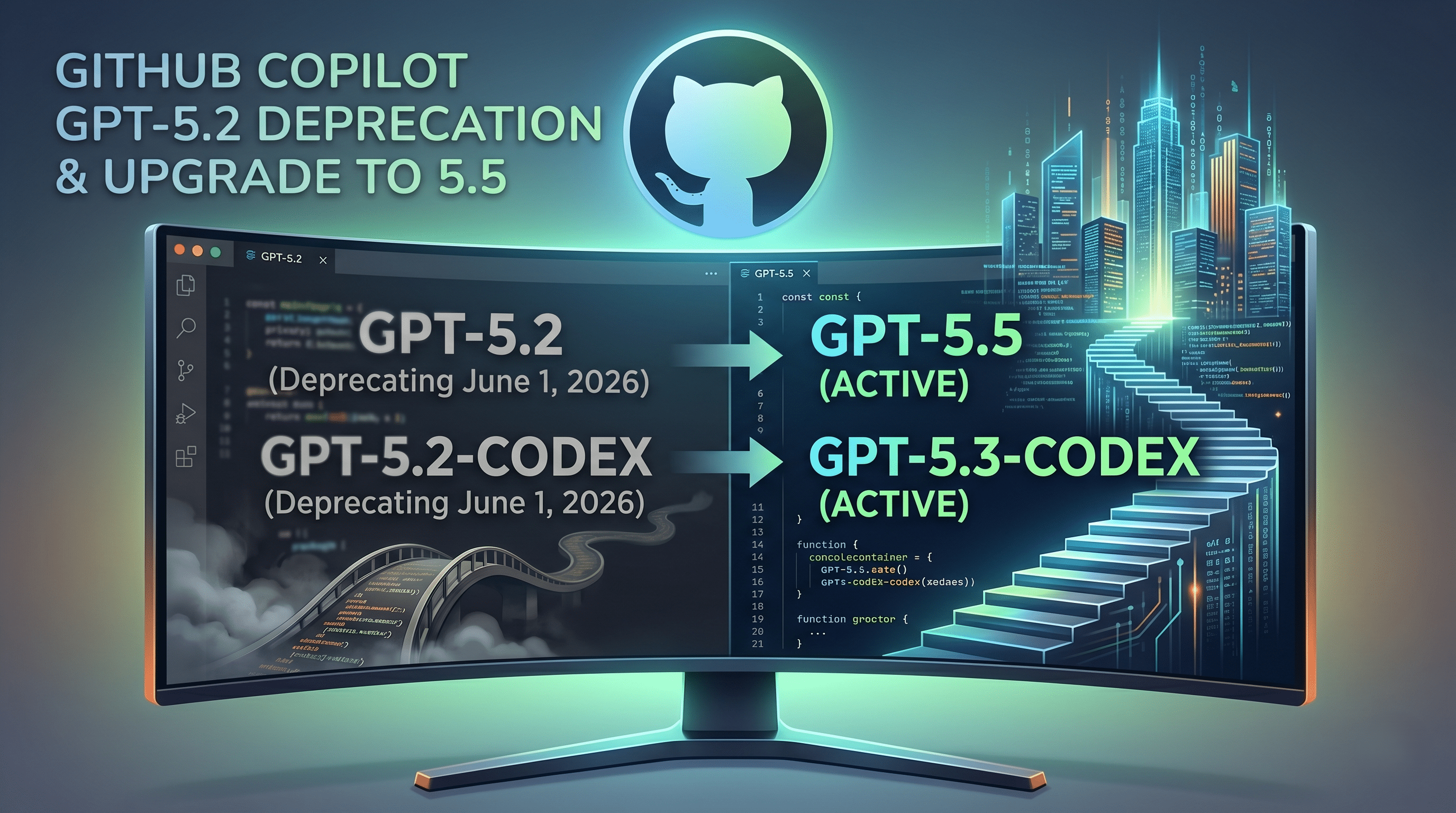
In a significant update for the global developer community, GitHub has officially announced the upcoming deprecation of the GPT-5.2 and GPT-5.2-Codex models across its Copilot ecosystem. Scheduled for June 1st, 2026, this transition marks a pivotal moment for development teams worldwide, signaling a definitive shift towards the more advanced GPT-5.5 and GPT-5.3-Codex frameworks. This comprehensive report outlines the details of this transition, the strategic reasons behind it, the expected enhancements from the new models, and the actionable steps enterprise administrators must take to ensure a seamless migration.
The Deprecation Timeline and Affected Services
Understanding the exact scope of this deprecation is critical for maintaining uninterrupted continuous integration and deployment (CI/CD) pipelines and daily coding workflows. Effective June 1st, 2026, GitHub will officially retire the GPT-5.2 and GPT-5.2-Codex models across the vast majority of GitHub Copilot experiences.
This sweeping change will impact several core functionalities that developers interact with daily, including:
- Copilot Chat: The conversational interface used for querying codebases and generating architectural suggestions.
- Inline Edits: The seamless, within-the-editor code modifications and completions.
- Ask and Agent Modes: The advanced, autonomous coding features that assist in complex, multi-step engineering tasks.
- General Code Completions: The foundational predictive text feature that accelerates typing and boilerplate generation.
The Singular Exception: Copilot Code Review It is highly important to note a specific carve-out in this deprecation policy. The GPT-5.2-Codex model will remain active and supported exclusively within the Copilot Code Review environment. This strategic exception suggests that the 5.2-Codex model has been heavily optimized and fine-tuned for the specific nuances of reviewing pull requests, identifying logical flaws, and enforcing coding standards, making its immediate replacement in this specific vertical unnecessary at this time.
The Upgrade Path: Embracing GPT-5.5 and GPT-5.3-Codex
The sunsetting of older models is intrinsically linked to the deployment of superior alternatives. To ensure that developers continue to experience the highest quality of AI assistance, GitHub is directing users toward the next generation of large language models.
- Replacing GPT-5.2 with GPT-5.5: For general chat, reasoning, and complex query resolution, GPT-5.5 stands as the designated successor. This model brings anticipated improvements in context retention, logical deduction, and a reduction in AI hallucinations. For global teams working on massive, interconnected microservices, the enhanced context window of GPT-5.5 will likely provide significantly more accurate and highly contextualized answers.
- Replacing GPT-5.2-Codex with GPT-5.3-Codex: For pure code generation and inline completion, GPT-5.3-Codex is the new standard. Developers can expect faster inference times—crucial for maintaining a "flow state" during programming—along with deeper support for niche programming languages and updated syntax frameworks that have emerged over the last year.
Geographic and Organizational Impact (GEO & SEO Considerations)
For multinational corporations and distributed open-source teams, tool consistency is paramount. A deprecation event of this scale requires synchronized updates across geographic boundaries to prevent fragmentation in team productivity. Search Generative Experience Optimization (GEO) trends indicate that engineering leads globally are actively searching for ways to standardize AI configurations across their organizations.
Because GitHub Copilot integrates directly into Integrated Development Environments (IDEs) like VS Code and enterprise platforms like GitHub.com, the shift to GPT-5.5 will universally affect developers from Silicon Valley to Tokyo. Ensuring that all regional offices and remote developers are operating on the updated GPT-5.5 architecture by the June 1st deadline will mitigate discrepancies in code quality and generation speed.
Actionable Steps for Copilot Enterprise Administrators
While individual users may experience a relatively automated transition, GitHub Copilot Enterprise administrators bear the responsibility of facilitating this migration at the organizational level. Proactive management is required to prevent workflow disruptions.
- Audit Current Usage: Administrators should begin by reviewing their current Copilot settings to understand the extent to which their teams rely on the specific GPT-5.2 models.
- Update Model Policies: The most critical step is enabling access to the alternative models (GPT-5.5 and GPT-5.3-Codex). This must be executed through the model policies within the enterprise's Copilot settings dashboard.
- Verify Availability: Once the policies are updated, administrators must verify that the new models are successfully propagating to end-users. This can be confirmed by checking individual Copilot settings and ensuring the policy reflects the newly enabled models.
- Monitor the VS Code Selector: For developers using Visual Studio Code, the ultimate confirmation of a successful transition is the appearance of GPT-5.5 and GPT-5.3-Codex in the Copilot Chat model selector dropdown within the IDE, as well as on the web interface at github.com.
- No Action for Removal: Administrators do not need to manually delete or uninstall the old models. Once the June 1st, 2026 deadline passes, GitHub will automatically remove GPT-5.2 and the deprecated instances of GPT-5.2-Codex from the available model lists.
Enterprise Support and Smooth Transitions
Change management in enterprise software development can be complex. Recognizing this, GitHub has established dedicated support channels for this transition. GitHub Enterprise customers who encounter integration challenges, require custom policy configurations, or have specific concerns regarding the deprecation timeline are strongly encouraged to reach out to their designated GitHub account managers. Leveraging this enterprise-grade support will be crucial for massive organizations that have built proprietary internal workflows or customized integrations on top of the Copilot API.
Conclusion: Preparing for the Next Era of Coding
The retirement of GPT-5.2 and GPT-5.2-Codex is not merely the end of a product lifecycle; it is a vital step forward in the continuous improvement of developer tooling. By migrating to GPT-5.5 and GPT-5.3-Codex, engineering teams will unlock new levels of speed, accuracy, and operational efficiency. However, the benefits of this upgrade can only be fully realized through proactive administrative action.
By updating workflows, modifying enterprise model policies, and communicating these changes clearly to engineering staff prior to the June 1st, 2026 deadline, organizations can ensure that their developers remain empowered by the most advanced AI capabilities available on the market. The future of software development remains collaborative—not just between human engineers, but between humans and increasingly sophisticated artificial intelligence.


Comments
No comments yet. Be the first to share your thoughts!
Leave a Comment