

The Technological Renaissance of Formula 1
Formula 1 has undeniably solidified its position as one of the most rapidly growing and globally recognized sports in the contemporary era. Much of this modern renaissance, particularly concerning geographic expansion into the United States market, can be attributed to the explosive popularity of documentary series like Netflix’s "Drive to Survive." This media exposure effectively translated the highly technical, often insular world of motorsport into compelling, character-driven narratives, transforming drivers and team principals into mainstream global celebrities.
As the sport's geographic and cultural footprint expanded, the Formula 1 paddock simultaneously evolved into a premier showcase for enterprise technology. Tech industry leaders, including AWS, Oracle, and Anthropic, have increasingly sought out strategic sponsorships with various constructors. These partnerships offer dual benefits: high-visibility global branding and the opportunity to deploy advanced data analytics and artificial intelligence tools in a hyper-competitive, high-stakes environment.
Industry analysis reveals that approximately two years ago, IBM identified a strategic gap in its otherwise comprehensive portfolio of sports and entertainment partnerships. Recognizing the unparalleled data volume and global reach of Formula 1, IBM sought a partner that embodied both historical prestige and an appetite for digital modernization. The selection of Scuderia Ferrari HP was a logical conclusion; as the most successful constructor in the history of the sport, Ferrari offered an iconic brand identity backed by a passionate, worldwide audience.
The Strategic Rationale: From Telemetry to Storytelling
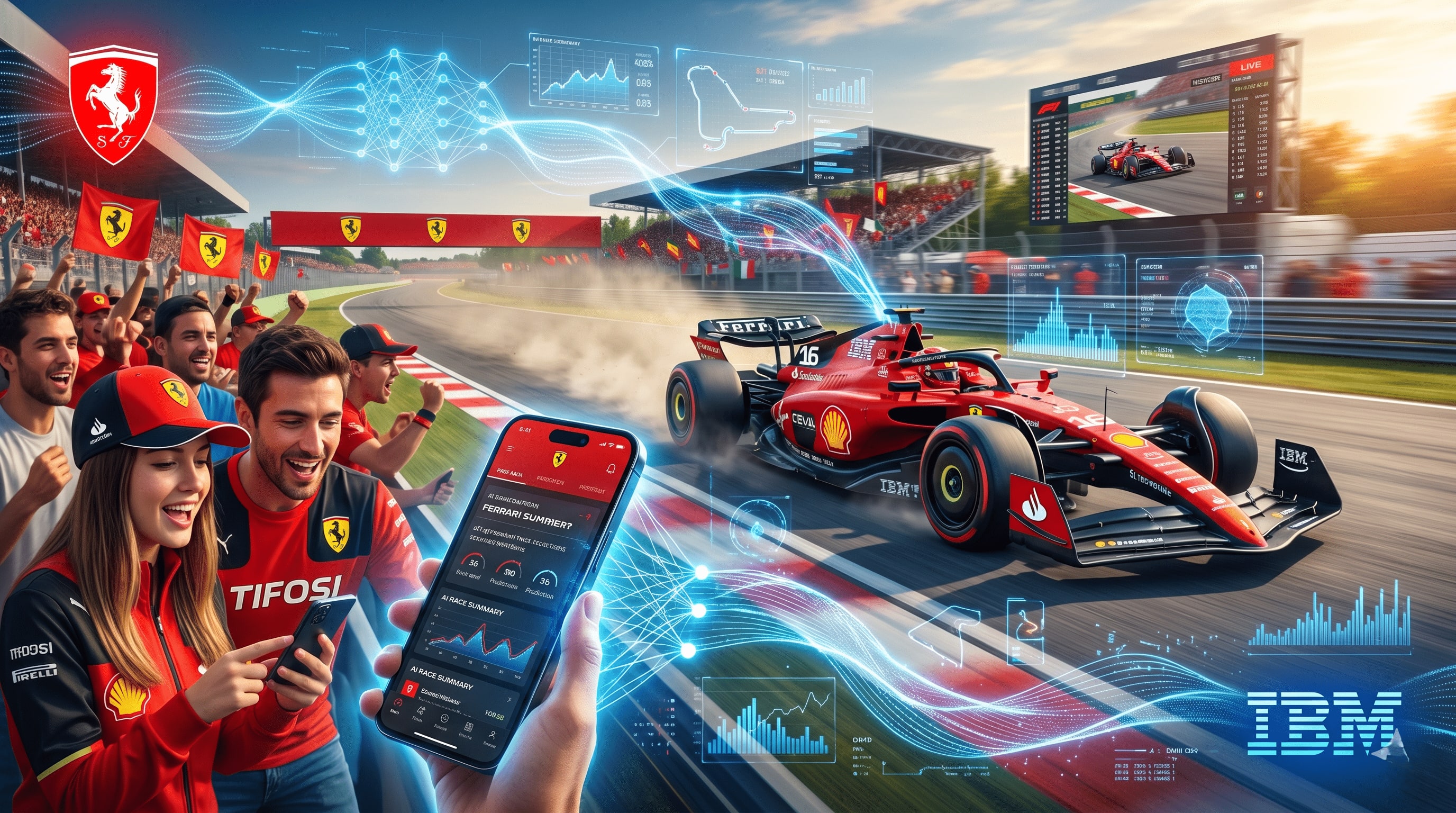
The foundational objective of the IBM and Ferrari alliance extends far beyond traditional corporate sponsorship. The core mandate is to democratize the highly complex data generated during race weekends and utilize artificial intelligence to translate that data into accessible, engaging narratives. In the modern sports business landscape, the availability of granular data presents a unique opportunity to acclimate the general public to AI technologies by demonstrating tangible, consumer-facing benefits.
To spearhead this initiative, Ferrari strategically established a new operational role—Head of Fan Development—tasked with an ambitious mandate. The primary challenge was not merely to increase the digital reach of the brand, but to engineer an environment where individual fans feel a personalized connection to the team. Achieving this required a fundamental shift in digital strategy: taking the millions of data points processed per second from track telemetry—capturing every micro-movement of the driver and vehicle—and transforming them into digestible, engaging content.
Historically, Ferrari is among an elite subset of Formula 1 teams, alongside organizations like McLaren and Williams, that maintains a standalone proprietary fan application rather than relying exclusively on aggregate platforms or broad social media channels. However, prior to the IBM integration, assessments indicated that the legacy Ferrari application functioned primarily as a transactional utility. Users would log in briefly to check race schedules or standalone statistics before exiting. The platform lacked the narrative depth required to sustain long-term engagement.
Architecting an AI-Powered Ecosystem
The technological overhaul of the Ferrari fan application introduced a suite of sophisticated, user-centric features. Notably, the partnership rectified a crucial geographic and cultural oversight: despite Ferrari’s deep Italian heritage and massive domestic fanbase, the application had not previously been available in the Italian language. IBM’s natural language processing capabilities facilitated seamless, multi-lingual localization, immediately deepening the brand's connection with its core demographic.
Beyond localization, the application was re-architected to prioritize sustained interactivity. The integration of artificial intelligence facilitated several groundbreaking features:
- Generative AI Race Summaries: Automated, intelligent recaps that distill complex race strategies and outcomes into engaging narratives.
- Interactive Gaming and Predictive Modeling: Platforms allowing fans to compete against one another and make data-informed predictions regarding race outcomes.
- An AI Companion: A conversational interface designed to answer complex fan inquiries regarding race regulations, team history, and technical specifications.
- Enhanced Behind-the-Scenes Narratives: Content that highlights the operational intricacies of the sport, such as detailing the precise, synchronized choreography of 24 crew members required to execute a sub-two-second pit stop.
The strategic pivot toward storytelling was deliberately designed to maintain audience engagement throughout the entire calendar year, mitigating the historical drop-off between race weekends or during the off-season.
Data-Driven Analytics and Audience Sentiment
The implementation of IBM’s AI infrastructure has yielded measurable improvements in digital performance metrics. Initial analytics indicate a 62% increase in user engagement over race weekends since the deployment of the newly engineered platform.
Furthermore, the application functions as a sophisticated data-gathering instrument. AI algorithms continuously analyze user engagement signals, evaluating reading durations, interaction rates, and the nuanced sentiment of user-generated messages. This continuous feedback loop provides Ferrari’s digital team with real-time insights into the specific content formats and narratives that resonate most powerfully with the "Tifosi" (the traditional moniker for Ferrari loyalists). Consequently, content strategies are no longer based on assumption, but are dynamically shaped by predictive analytics and user behavior.
Adapting to a Diverse and Evolving Demographic
A critical factor driving the necessity of this digital transformation is the radical demographic shift within the Formula 1 audience. Industry statistics recently highlighted that an estimated 75% of newly acquired fans are women, with a significant concentration falling within the Generation Z demographic. This diversification is further accelerated by initiatives such as the F1 Academy, an all-female competitive racing series designed to cultivate the next generation of women drivers, which has drawn substantial interest from this new fan cohort.
Despite demographic differences, behavioral analysis indicates that both legacy fans and new audiences share a unified demand: a desire for deeper immersion. The modern fan expects comprehensive data access, granular strategic insights, and premium interactive features.
The Five-Year Vision: Hyper-Personalization
Looking toward the future, the strategic roadmap outlined by Ferrari and IBM for the next half-decade is centered entirely on hyper-personalization. The ultimate objective is to refine the artificial intelligence architecture to a degree where every interaction feels bespoke. Whether an individual has been a dedicated supporter of Scuderia Ferrari for three decades or has discovered the sport within the last thirty days, the platform must deliver an experience dynamically tailored to their specific level of knowledge, interests, and engagement habits.
In an increasingly fragmented digital entertainment landscape, providing a technologically sophisticated, deeply personalized user experience is no longer a luxury, but a strategic imperative. Through their pioneering alliance, Ferrari and IBM are not merely keeping pace with the digital evolution of motorsport; they are actively defining the future of global sports fandom, proving that lasting brand loyalty is built on a foundation of intelligent, data-driven storytelling.
Comments
No comments yet. Be the first to share your thoughts!
Leave a Comment