

Apple’s Fatal Supply Misjudgment: How OpenClaw’s Popularity and the MacBook Neo Triggered a US Restock Crisis
In the hyper-competitive landscape of Silicon Valley, Apple has long been revered as the undisputed king of supply chain management. For over two decades, the California-based tech giant has masterfully orchestrated the global flow of components to ensure its premium devices reach consumers’ hands exactly when demand peaks. However, the technology landscape is shifting rapidly, and even titans can stumble.
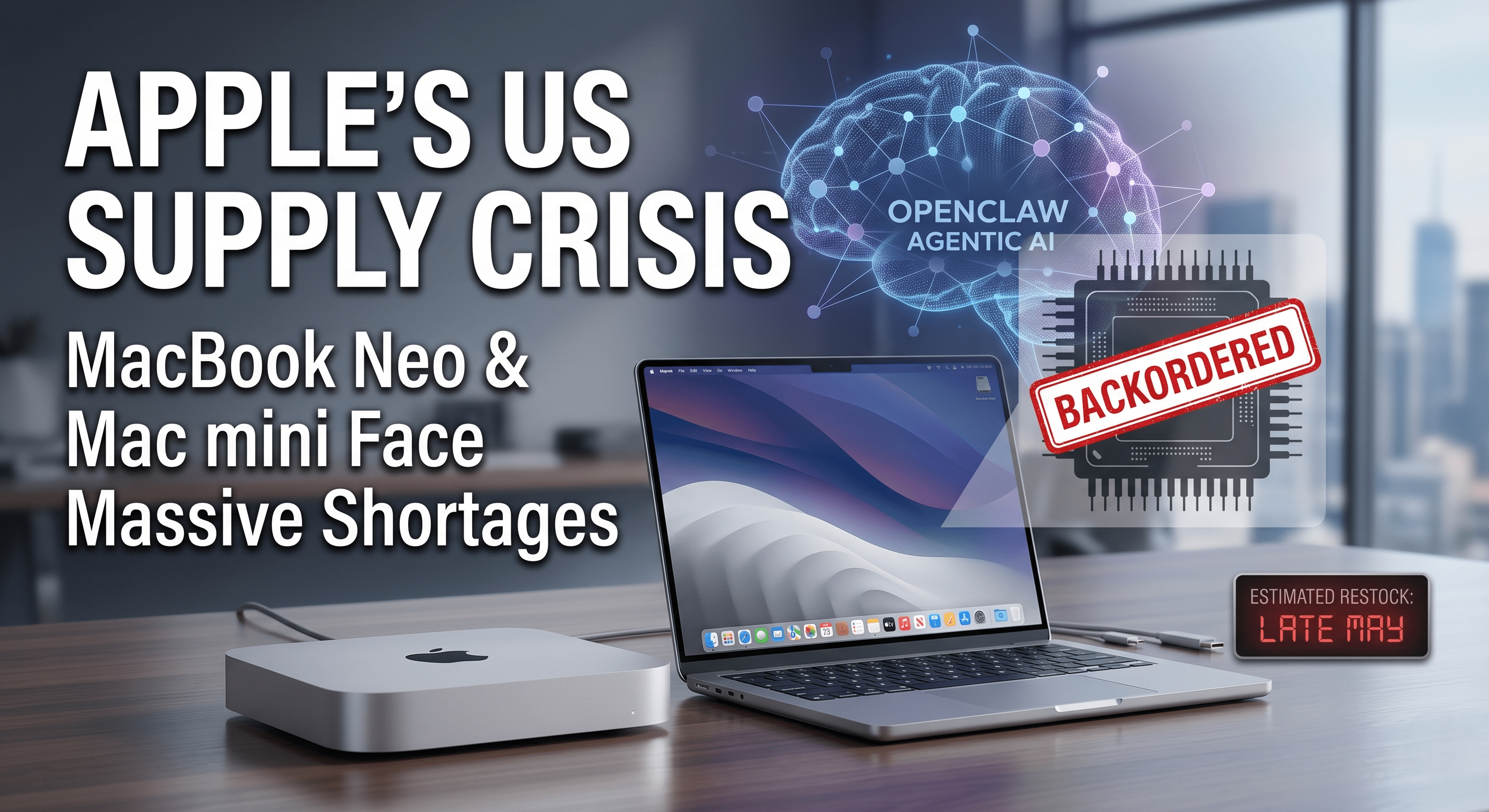
During the highly anticipated Q2 2026 earnings call, Apple made a rare admission that shocked industry analysts and frustrated stateside consumers alike: a massive miscalculation regarding advanced chip supply and consumer trends has resulted in completely depleted inventories for some of its most sought-after hardware. The primary culprits? The unexpected explosion of agentic AI platforms like OpenClaw, coupled with a highly aggressive pricing strategy for the new MacBook Neo.
The resulting fallout is a situation that competitors might envy on paper, but one that translates to a severe loss of immediate revenue and a growing base of disgruntled American customers waiting months for backordered deliveries.
The OpenClaw Phenomenon: A Run on Desktop Hardware
Memory supply constraints are merely the tip of the iceberg in Apple’s current logistical nightmare. The company candidly revealed during its recent earnings report that it fundamentally underestimated the consumer pivot toward agentic AI use cases. Over the past few months, platforms like OpenClaw have surged in popularity across the United States, transitioning from niche developer tools to mainstream productivity necessities.
To run local Large Language Models (LLMs) and autonomous AI agents comfortably, users require robust, high-bandwidth memory configurations. Historically, securing this level of processing power meant investing in incredibly expensive workstation setups that were entirely out of budget for the average buyer. Enter the M4 Mac mini and the Mac Studio.
- The M4 Mac mini: This compact powerhouse has become the ultimate affordable gateway for stateside tech enthusiasts and professionals looking to run local agents without paying exorbitant cloud subscription fees. Its unified memory architecture makes data-heavy AI operations a breeze.
- The Mac Studio: For heavier, enterprise-level OpenClaw deployment, the Mac Studio has become the gold standard.
Unfortunately, Apple did not foresee this rapid, localized AI hardware boom. Demand for these specific, high-memory configurations skyrocketed overnight, completely wiping out existing stock. Thousands of consumers who are ready to integrate OpenClaw into their daily workflows are now stuck in a holding pattern, waiting patiently for Apple to restock its shelves.
The MacBook Neo Dilemma: When Aggressive Pricing Backfires
While the desktop division struggles to keep up with the AI revolution, Apple’s portable lineup is facing a distinct, self-inflicted crisis. The introduction of the MacBook Neo was intended to dominate the entry-level laptop market. Priced at an incredibly aggressive $599, it was positioned to sweep the US education sector and budget-conscious consumer segments.
The strategy worked—perhaps entirely too well. The MacBook Neo became an instant bestseller, but this success masked a severe underlying vulnerability: the supply of the A18 Pro chips powering the device. Apple was already running short on these advanced chipsets before the Neo’s launch. By heavily promoting the $599 machine without a fortified silicon supply chain, the company cannibalized its own inventory.
CEO Tim Cook addressed this directly, noting that the company significantly underestimated how quickly these new product classes would spike in popularity. Lack of advanced chipsets remains the primary bottleneck, and the company has confirmed that these major unavailability problems will persist for several months.
Millions Left on the Table: The Financial Repercussions
In the corporate world, having demand outpace supply is often framed as a "good problem to have." However, in Apple's case, it represents a catastrophic missed opportunity. By failing to anticipate the popularity of OpenClaw and the immense draw of the MacBook Neo, Apple has missed out on potentially millions of dollars in Q2 revenue.
This lost capital is more critical now than ever. Market forecasts indicate that Apple will soon have to begin purchasing memory and solid-state storage components at highly inflated prices for its upcoming product cycles. The revenue lost during this current hardware drought would have served as a vital financial cushion to absorb those impending supply chain cost hikes. Instead, the company must now navigate tighter margins while frantically trying to fulfill backorders.
The Looming Threat to the iPhone Ecosystem
While Mac sales are vital, the bulk of Apple's global earnings still heavily relies on the iPhone. The current supply chain fractures present a behemoth of an obstacle that threatens to bleed into the smartphone division. If the company cannot stabilize its advanced chip acquisition and manage the rising costs of memory, it threatens to disrupt the long-standing pricing stability of iPhones.
Should Apple fail to overcome this logistical challenge, American consumers might see a future where there simply isn't a competitively priced product left in the entire Apple lineup. If base manufacturing costs rise and chip shortages persist, the inevitable result is cost passed down to the consumer—a move that could alienate long-time users.
Silver Linings: Where to Buy the MacBook Neo in the US
For US consumers actively hunting for the elusive MacBook Neo, the situation is grim but not entirely hopeless. While the Apple Store currently shows extended shipping delays stretching late into the summer, third-party retailers are offering a temporary lifeline.
Currently, Amazon has managed to secure a limited supply of the MacBook Neo for the American market. While you will still need to make peace with the fact that these units will not arrive before late May, they do represent the fastest fulfillment option available right now. Even better, Amazon is offering slight discounts on the highly sought-after hardware:
- Base Model (256GB SSD): Currently available for a slightly discounted price of $589.99.
- Upgraded Model (512GB SSD with Touch ID): Currently listed at $689.99.
If you are looking to secure a machine for the upcoming back-to-school season or simply want to upgrade your daily driver, placing an order through these limited retail channels is highly recommended before the broader US market completely drains this secondary stock.




Comments
No comments yet. Be the first to share your thoughts!
Leave a Comment