

Anthropic Expands Claude Into Creative Workflows With Adobe, Blender, Ableton, Canva, Autodesk, and More
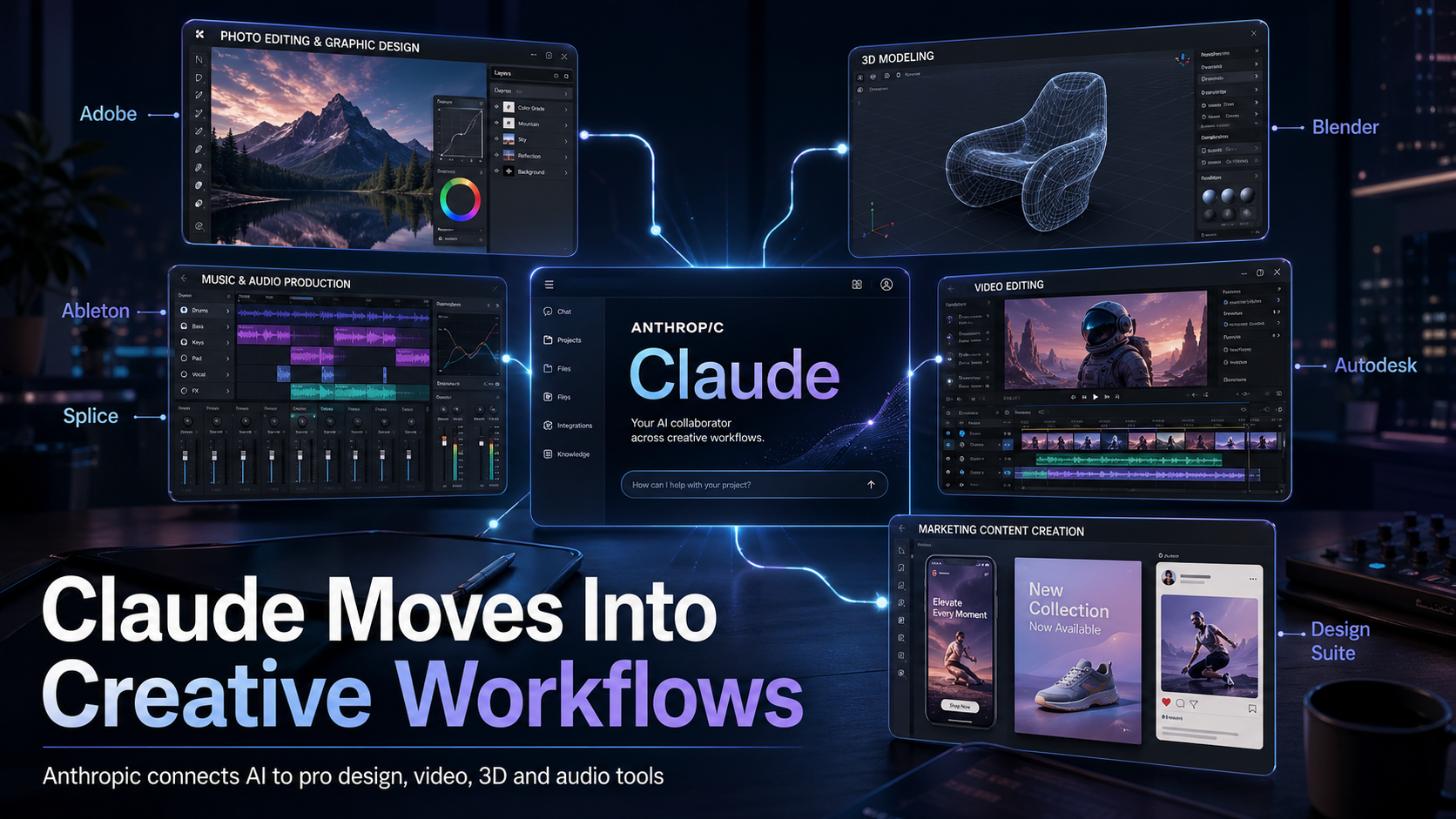
Anthropic is making a major move into the creative technology market by expanding Claude beyond text-based assistance and deeper into professional design, video, music, 3D, and marketing workflows. The company has announced a new wave of creative connectors for Claude, including a major Adobe integration that gives users access to more than 50 professional-grade creative tools directly from the Claude interface.
The announcement signals a clear shift in how artificial intelligence tools are being positioned in the United States creative industry. Instead of simply generating text, summarizing documents, or answering questions, Claude is being designed as a workspace where marketers, designers, editors, creators, and business teams can interact with specialized creative software without constantly switching between apps.
At the center of this expansion is the new Adobe connector. Through this integration, Claude users can access tools connected to Adobe Creative Cloud, including Photoshop, Illustrator, Premiere, Lightroom, Firefly, and other widely used professional applications. The goal is to make complex creative production easier for more people, especially teams that may not have advanced technical skills in every Adobe product.
For American businesses, agencies, freelancers, and content teams, this could become an important productivity update. Creative work in the United States often moves quickly across multiple formats: social media graphics, short-form videos, product images, campaign assets, brand visuals, presentations, and promotional content. Many of these tasks require professional tools, but not every employee has the training to use them efficiently. Anthropic’s new connectors appear designed to reduce that barrier.
With the Adobe connector, users may be able to retouch images, enhance photos, resize video content for different platforms, create campaign assets, or prepare visual materials through Claude while relying on Adobe’s own creative engines in the background. This distinction is important. Claude is not simply replacing Adobe’s tools. Instead, it acts as a natural-language interface that helps users request creative actions while Adobe’s software handles the execution.
This approach could make professional design software more accessible to non-designers. A marketing manager, for example, may not know the exact steps required to resize a video for TikTok, Instagram Reels, YouTube Shorts, and LinkedIn. With a Claude connector, that user could describe the desired outcome and rely on the integrated creative tool to complete the task more efficiently. The same could apply to resizing product images, adapting campaign visuals, or generating different versions of branded assets.
The integration also gives experienced creatives more flexibility. Professional designers, video editors, and content producers may still prefer to make detailed edits inside Adobe applications. However, Claude can help with repetitive steps, early drafts, asset preparation, file adjustments, and workflow automation. Once the initial work is created or modified through Claude, users can continue editing inside the original Adobe apps for more advanced creative control.
Anthropic’s broader strategy goes beyond Adobe. The company is also adding connectors for several other creative platforms, including Blender, Ableton, Autodesk Fusion, Affinity by Canva, SketchUp, Splice, Resolume Arena, and Resolume Wire. These integrations suggest that Claude is being positioned as a cross-disciplinary creative assistant, not just a writing or research tool.
The Blender connector is especially notable for 3D artists, animators, game designers, and visualization professionals. Blender is widely used for 3D modeling, animation, rendering, and visual effects. By bringing Blender-related workflows closer to Claude, Anthropic could help users create, modify, or manage 3D assets with less manual effort. This may be useful for product visualization, architectural concepts, game assets, educational content, and digital storytelling.
Ableton and Splice introduce a music and audio production angle. Ableton is popular among music producers, sound designers, and live performers, while Splice is known for samples, loops, and music creation resources. These connectors could support creators working on audio branding, podcast production, sound design, music demos, or multimedia content. In the United States, where creator economy businesses increasingly rely on video, audio, and short-form media, these integrations may help streamline production.
Autodesk Fusion and SketchUp bring Claude into design, engineering, architecture, and product development workflows. Autodesk Fusion is used for 3D CAD, CAM, and product design, while SketchUp is widely used in architecture, interiors, construction planning, and visual modeling. A Claude interface connected to these tools could help professionals explore concepts, prepare models, organize design steps, or simplify technical workflows.
Canva’s Affinity tools add another important layer. Canva has grown strongly among small businesses, social media managers, educators, and entrepreneurs, while Affinity has traditionally appealed to designers looking for professional creative software outside the Adobe ecosystem. By including Affinity by Canva, Anthropic is not limiting Claude’s creative future to one software provider. Instead, it is building a wider network of creative platforms.
For SEO-focused content teams and digital marketers in the USA, this development matters because creative production is now tightly connected to search visibility, brand authority, and audience engagement. A successful online campaign often requires more than written content. It needs optimized visuals, platform-specific graphics, branded videos, thumbnails, infographics, short clips, and consistent design assets. If Claude can help generate and adapt these assets through professional tools, it may become more valuable for content marketing teams.
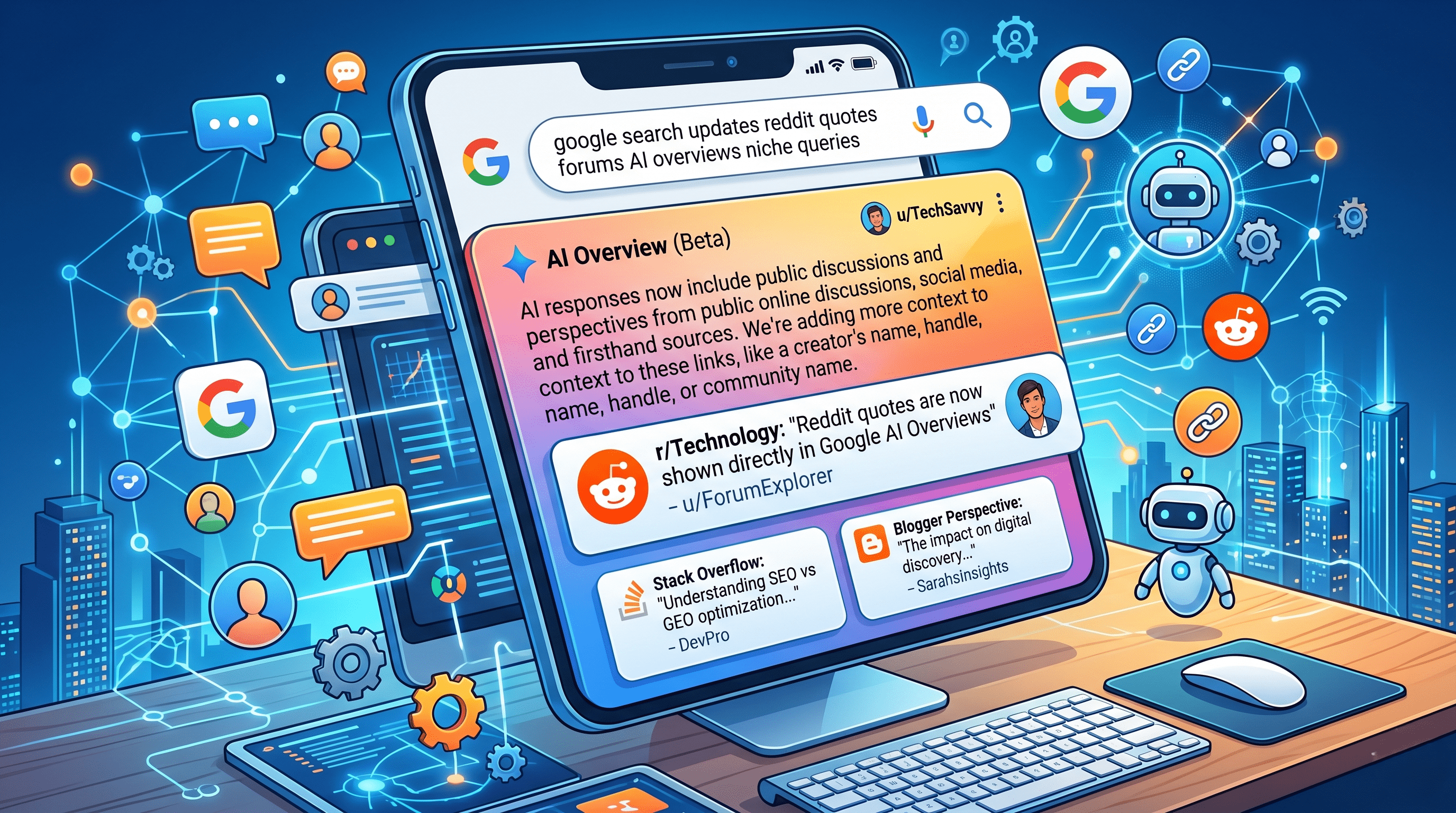
The move also fits into a larger trend known as GEO, or generative engine optimization. As AI-powered search engines and answer engines become more common, brands need content that is not only optimized for traditional search engines but also structured, trustworthy, and useful for AI-driven discovery. Creative assets play a role in that strategy. Reports, blog posts, product pages, and marketing campaigns that include strong visuals, clear formatting, and authoritative information may perform better across both search engines and AI-generated summaries.
Anthropic appears to understand that the future of workplace AI is not only about generating answers. It is about connecting AI assistants to the tools people already use. In creative industries, the most valuable AI assistant may be the one that can move smoothly between writing, image editing, video production, 3D design, audio creation, and campaign management.
Still, Anthropic is careful to frame these connectors as support for human creativity rather than a replacement for it. The company’s message is that Claude can reduce repetitive tasks and manual work while leaving creative judgment, taste, and imagination in the hands of people. That positioning is important at a time when many artists, designers, and content creators are concerned about the impact of AI on creative jobs.
The Adobe connector is expected to be available globally, with users needing a Claude account to access it. Some basic functions may be available without signing in to an Adobe account, while higher usage limits, additional tools, and the ability to save work across sessions may require Adobe login access. This structure could allow casual users to test simple features while giving professional users a deeper workflow through their existing Adobe subscriptions.
For U.S. companies, this could become part of a larger AI adoption strategy. Instead of training every employee on every creative platform, businesses may increasingly rely on AI interfaces that simplify access to specialized tools. This could reduce production time, improve collaboration between creative and non-creative teams, and help smaller companies produce professional-quality content with fewer resources.
However, the success of these connectors will depend on reliability, creative quality, user control, and how well Claude understands specific production requests. Professional users will expect accurate outputs, editable files, brand consistency, and smooth handoff into native applications. If the integrations are too limited or unpredictable, experienced creatives may use them only for basic tasks. If they work well, they could become a serious productivity layer across the creative software market.
Anthropic’s expansion into Adobe, Blender, Ableton, Canva, Autodesk, Splice, and other creative platforms shows that Claude is becoming more than a chatbot. It is moving toward becoming an AI-powered command center for modern creative work. For marketers, designers, video teams, musicians, entrepreneurs, and digital creators in the United States, this could mark the beginning of a new phase where professional creative tools become easier to use, faster to access, and more connected through natural language.
The most important takeaway is that Anthropic is not trying to make Claude a standalone replacement for creative software. Instead, it is turning Claude into a bridge between human ideas and professional creative applications. If this model succeeds, the next generation of creative work may be less about learning every menu, shortcut, and technical workflow, and more about clearly describing the creative result a person wants to achieve.

Comments
No comments yet. Be the first to share your thoughts!
Leave a Comment