
The AI Super Agent Race Is Reshaping Knowledge Work in the United States
How OpenAI, Google Gemini, Claude, and NotebookLM Are Competing to Build the Future of Everyday Productivity
Artificial intelligence is moving beyond simple chatbots. In the United States, a new wave of AI tools is transforming how professionals, students, creators, small business owners, and corporate teams manage daily knowledge work. The latest updates from OpenAI, Google Gemini, Anthropic’s Claude ecosystem, and NotebookLM show that the competition is no longer only about which model gives the smartest answer. The real race is about which AI system can act as a true digital coworker.
Across the American productivity market, the demand is clear. Users want AI that can read documents, organize files, draft emails, create presentations, analyze information, manage workflows, and connect with third-party tools. The most valuable AI assistant is no longer the one that only responds to prompts. It is the one that can complete work.
This shift has created what many observers now describe as the AI super agent race. OpenAI, Google, and Anthropic are each trying to define what the next generation of AI-powered work will look like.
OpenAI Codex Moves Beyond Coding
OpenAI’s Codex has traditionally been associated with programming. Many users still think of Codex as a tool mainly designed for developers. However, recent updates suggest that OpenAI is positioning Codex as something much broader: a unified AI workspace for both technical and non-technical users.
The key idea behind Codex is flexibility. Instead of separating chat, coding, and knowledge work into different tabs or tools, Codex can adapt inside one interface. A user can ask a general question, request help writing code, or assign a knowledge-work task without switching environments.
For American professionals, this kind of unified experience matters. Many office workers do not want to learn multiple AI apps for different tasks. They want one system that can understand the context and respond appropriately. Codex appears to be moving in that direction by blending traditional AI chat with more agent-like capabilities.
One important feature is task tracking. As users interact with Codex, the system can identify unfinished work and turn it into follow-up tasks. For example, if an AI assistant reviews a user’s email inbox and finds messages that require action, it can create a list of items to address. This makes the tool feel less like a chatbot and more like a productivity manager.
Codex also supports plugins, connectors, and automations, which are essential for knowledge workers who rely on email, documents, calendars, cloud storage, and business apps. These features suggest that OpenAI wants Codex to compete directly with Claude’s agent-style productivity tools.
Claude Co-Work Remains a Strong Competitor
Anthropic’s Claude ecosystem has become one of the most important competitors in the AI productivity space. Claude Co-Work is designed specifically for knowledge workers rather than only developers. It can assist with documents, websites, emails, automations, and tool integrations.
This makes Claude Co-Work especially relevant for non-technical users in the United States. Business professionals, marketers, consultants, educators, and independent creators often need help managing written information, creating digital assets, and automating repetitive tasks. Claude Co-Work targets that exact audience.
Unlike OpenAI’s unified Codex approach, Claude separates different workflows into more distinct areas. Users may interact with regular chat, coding-focused tools, or knowledge-work features depending on their needs. This structure can be helpful for users who prefer clear separation between tasks, though some may prefer the simplicity of OpenAI’s single-interface approach.
The competition between Codex and Claude Co-Work will likely become one of the most important AI productivity battles in the U.S. market. Both tools are trying to solve the same core problem: how to make AI useful for real work, not just conversation.
Google Gemini Focuses on File Creation and Workspace Integration
Google is taking a different path. Instead of building only around agent-style task execution, Gemini is becoming deeply integrated into Google Workspace and file creation. This matters because millions of American users already rely on Gmail, Google Docs, Sheets, Slides, and Drive for school, work, and personal projects.
Gemini can now create multiple file types directly inside the chat experience. These may include documents, spreadsheets, PDFs, presentations, rich text files, and other downloadable formats. It can also create files directly in Google Drive, such as Google Docs and Sheets.
This approach may not be as technically powerful as advanced coding agents or desktop-based automation tools, but it could be more accessible to everyday users. A small business owner may not care whether an AI agent can perform complex backend development. They may care much more that Gemini can quickly create a client proposal, a spreadsheet, a report, or a presentation inside the tools they already use.
For the U.S. market, this is a major advantage. Google Workspace is already widely used in companies, schools, nonprofits, and households. By embedding AI into familiar products, Google can reach users who may never adopt a separate AI agent app.
Gemini’s mobile functionality is also important. Being able to create files, documents, or slide decks from a phone gives users more flexibility. Remote workers, students, entrepreneurs, and content creators can generate useful materials while traveling, commuting, or working outside a traditional office.
AI Image Generation Is Becoming More Specialized
The AI image generation landscape is also evolving. Instead of one model being best for every use case, users are beginning to choose tools based on the task.
Some image models appear stronger when creating original visuals from text prompts. Others perform better when editing existing images. This distinction is important for creators, marketers, designers, and social media professionals in the United States.
For example, a user who wants to generate a polished image from scratch may choose one model, while someone who wants to modify a facial expression, change a background, or adjust an existing image may choose another. The practical result is that AI image tools are becoming more specialized, and users are learning to match each model to the job.
This trend is likely to continue as AI platforms compete not only on image quality but also on reliability, editing accuracy, brand consistency, and ease of use.
NotebookLM Improves Source Organization
NotebookLM continues to grow as a research and learning tool. One of the most useful updates is automatic source labeling by topic. This feature allows users to organize large collections of sources into labeled groups.
For students, researchers, analysts, and professionals, this is extremely valuable. A college student in the United States might create one notebook for a class and organize sources by chapter, theme, or exam topic. A business analyst might group sources by market segment, competitor, or product line. A journalist could organize research by topic, location, or source type.
The ability to assign sources to multiple labels also makes the system more flexible. Real-world information rarely fits into only one category. A single source may be relevant to technology, regulation, business strategy, and consumer behavior at the same time.
NotebookLM’s labeling feature improves both organization and retrieval. Instead of searching through a long list of documents, users can focus on a specific topic and generate summaries, study aids, flashcards, or audio overviews based on selected sources.
Prompting Is Becoming Simpler
Another important trend is the shift toward shorter, goal-focused prompting. As newer AI models become better at understanding intent, users may no longer need to write long, complicated prompts to get useful results.
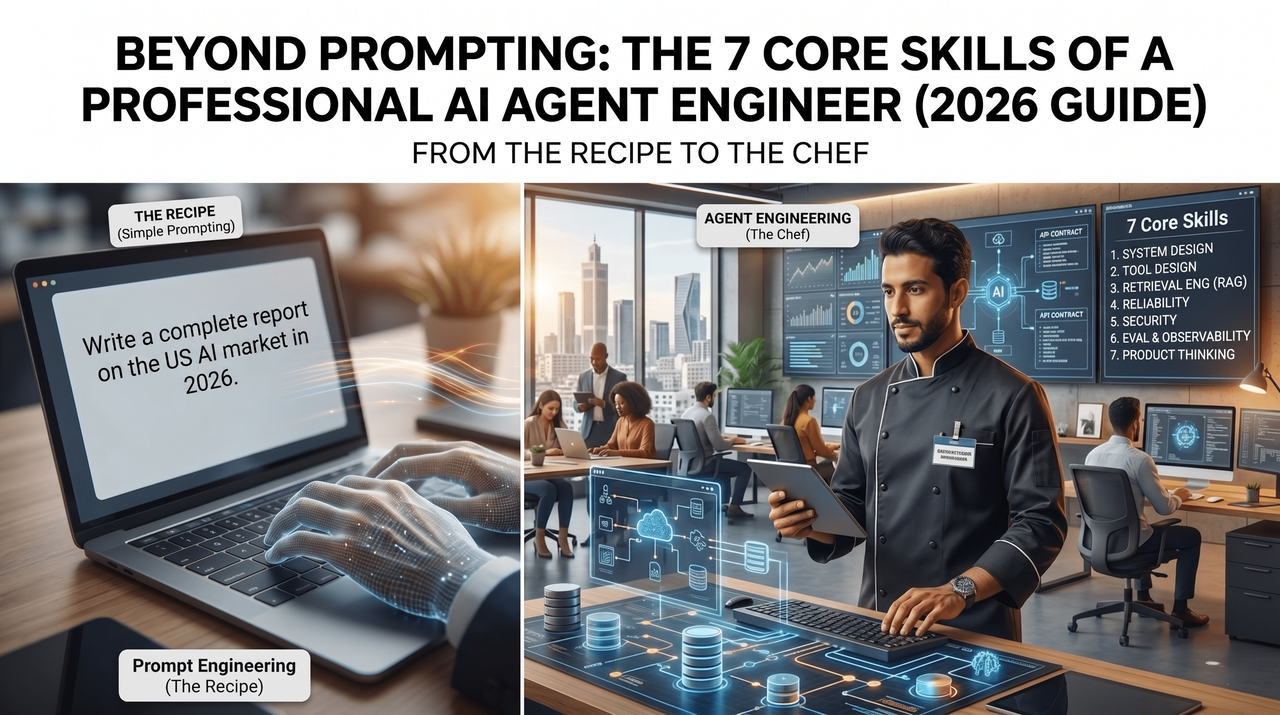
This is especially important for non-technical users. Many people in the United States have been discouraged by the idea that they need to master “prompt engineering” to use AI effectively. If modern models can understand shorter instructions and fill in the execution details, AI becomes more accessible to a broader audience.
The future of AI productivity may not depend on users learning complex prompt formulas. Instead, it may depend on users clearly stating their goals and allowing the AI system to plan the best path to complete the task.
AI Transparency Is Becoming More Important
As AI-generated content spreads across music, images, videos, social platforms, and news feeds, transparency is becoming a major issue. Platforms are beginning to explore verification systems that help users understand whether content is AI-generated or human-created.
This is particularly relevant in the United States, where AI-generated media can influence entertainment, politics, education, marketing, and public trust. Clear labeling can help users make better judgments about what they are seeing or hearing.
AI transparency will likely become a bigger priority for major platforms such as music streaming services, video platforms, and social media networks. As synthetic content becomes more realistic, users need better signals to identify its origin.
The Bigger Picture: AI Is Becoming a Work Partner
The latest updates from OpenAI, Google, Anthropic, and NotebookLM point toward the same conclusion: AI is becoming a practical work partner. The next major stage of AI adoption in the United States will not be defined only by smarter conversations. It will be defined by useful actions.
Professionals want AI that can manage tasks, create files, organize research, draft responses, generate visuals, and connect with the tools they already use. Students want AI that can structure study materials and simplify complex information. Creators want AI that can speed up production while preserving quality. Businesses want AI that can reduce repetitive work and improve productivity.
The AI super agent race is still in its early stages, but the direction is clear. OpenAI is pushing toward a unified assistant that can handle chat, coding, and knowledge work. Anthropic is building specialized tools for productive collaboration. Google is embedding AI deeply into file creation and Workspace experiences. NotebookLM is improving research organization and source-based learning.
For American users, this competition is good news. More competition means better tools, faster innovation, and more practical AI features for everyday work.
The winners in this race will not simply be the companies with the most powerful models. The winners will be the platforms that make AI feel useful, reliable, easy to understand, and deeply integrated into real daily workflows.

Comments
No comments yet. Be the first to share your thoughts!
Leave a Comment