


AI in April 2026: What’s Actually Changing (and How Businesses Can Use It Safely)
TL;DR (for busy readers)
AI in April 2026 is shifting from “chatbots that talk” to agents that do—systems that can plan, call tools, and complete multi-step tasks. That creates huge upside (speed, automation, better customer support), but also bigger risks (errors at scale, privacy leakage, compliance pressure). If you’re adopting AI now, the winning play is: pick 3–5 high-value workflows, put guardrails + measurement around them, and document what your system does so you’re ready for 2026–2027 regulatory deadlines—especially in the EU. 2
1) The biggest AI shift in April 2026: from “assistants” to “agents”
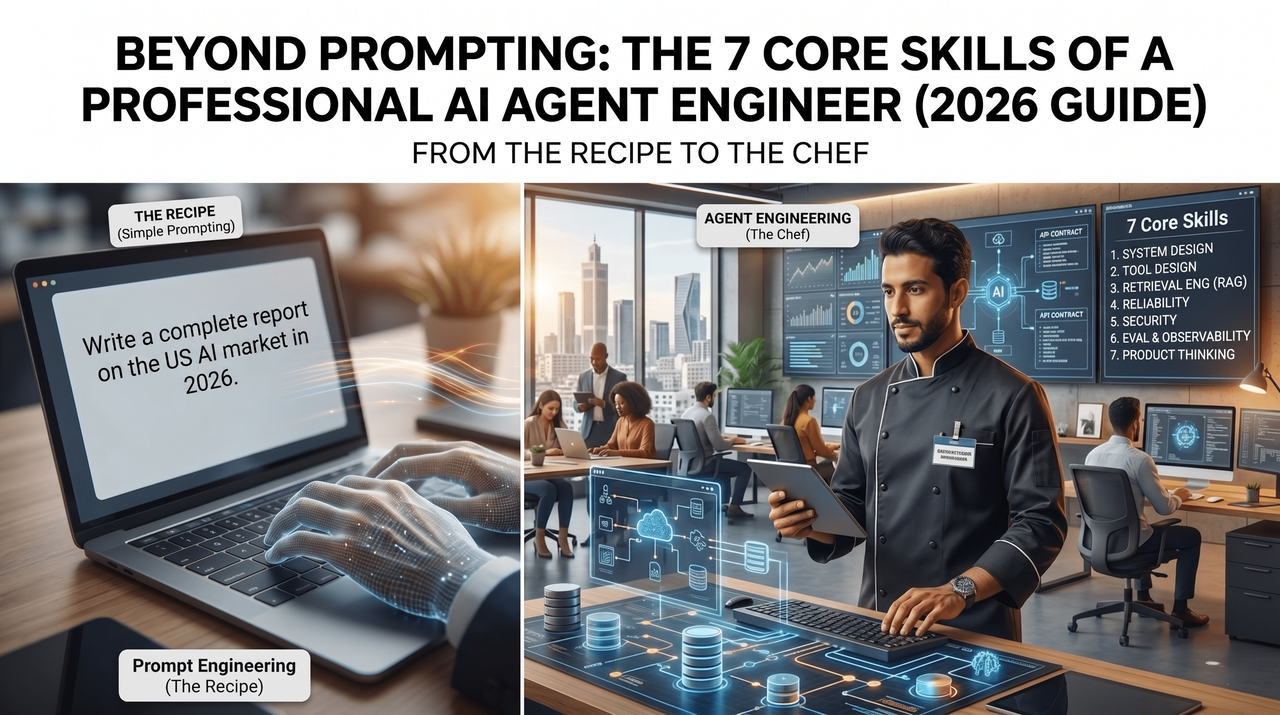
In 2023–2025, most teams used AI like a copilot: generate drafts, answer questions, summarize documents. In 2026, the bigger trend is AI agents: AI systems that can plan steps, invoke tools (search, databases, CRMs), and execute tasks with less human involvement. That’s why you’re seeing more real deployments in customer service, recruiting, internal IT, and operations—because agents can connect “thinking” to “doing.” 2
Why that matters for your website and marketing
This shift changes what content wins:
- Users want actionable instructions, checklists, examples, and “what to do next,” not fluffy definitions.
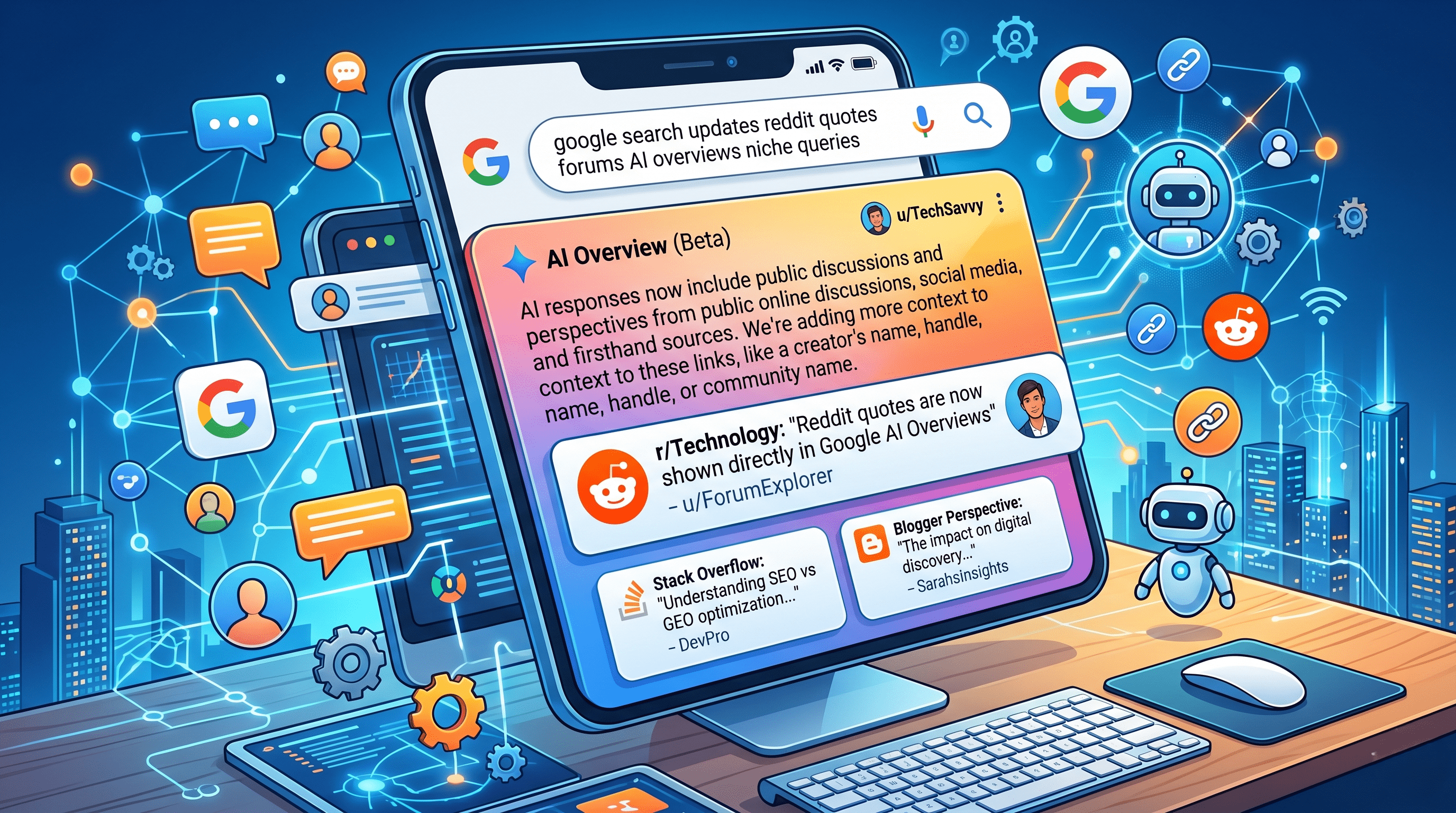
- AI answer engines reward content that is easy to extract facts from (clear headings, tight definitions, tables, “steps,” and consistent entity names).
- Trust signals matter more because AI systems are trying to pick sources that are dependable enough to quote. 1
2) AI + SEO in 2026: the rules didn’t “flip,” but expectations did
Google’s public stance remains consistent: using AI is not automatically bad; what matters is whether the content is helpful, accurate, and people-first. Google also explicitly calls out that accuracy applies to the full page package—titles, meta descriptions, structured data, and image alt text. 3
Practical April 2026 content standards that tend to win
A. Put the answer early.
For most queries, write the “money paragraph” first: who it’s for, what it solves, and the recommended approach.
B. Show real experience (not just “knowledge”).
Add 1–2 concrete proof elements:
- a mini case study (“before/after” metrics),
- screenshots (where appropriate),
- mistakes you made and fixed,
- a template you actually use.
Google’s “helpful content” system is now part of core ranking systems (since March 2024), so this “helpful-first” approach isn’t optional—it’s the foundation. 4
C. Be explicit about AI involvement.
Google suggests providing readers context about how content was created, especially when automation is involved. Even a short disclosure can improve trust. 3
3) What to publish in April 2026 if you want both SEO + GEO wins
Here are 8 content formats that tend to perform well in AI-driven search experiences:
- “Best practices” guides with a clear checklist (agent safety, prompt QA, evaluation).
- Implementation playbooks (“How to launch an AI chatbot in 30 days”).
- Templates (policy templates, evaluation rubrics, prompt libraries).
- Comparisons (RAG vs fine-tuning vs agents; when each wins).
- Pricing & ROI explainers (what affects cost, how to forecast).
- Compliance explainers (EU AI Act readiness steps).
- Troubleshooting pages (hallucinations, data leakage, retrieval quality).
- Local/service pages (if you sell AI services locally: “AI consulting in [City]”).
GEO tip: write for “extractability”
To make your page easy for AI systems to cite:
- Use a definition box (“AI agent = …”).
- Use tables for comparisons.
- Use short, labeled sections.
- Use consistent names for your company, product, city, and services.
4) AI regulation: the April 2026 reality check (especially for EU-facing businesses)
Even if you’re a US business, if you serve EU customers or operate there, the EU AI Act timeline matters.
- The EU AI Act is Regulation (EU) 2024/1689, published July 2024 and entered into force in August 2024. 5
- Many obligations have a general date of application of 2 August 2026 (a key compliance milestone widely summarized in EU Parliament materials). 6
What this means in plain English
If you’re building AI features (especially those that affect people’s rights, access, employment, credit, education, etc.), you should assume increasing pressure for:
- technical documentation,
- risk management,
- transparency disclosures,
- post-market monitoring,
- and clear accountability.
Researchers and legal analysts are already mapping how “agentic” systems intersect with the EU AI Act and related EU laws, and they stress documentation/compliance complexity as agents get more autonomous. 2
Note: there are also ongoing EU discussions about simplifying implementation timelines (an “AI omnibus” conversation), but businesses should plan based on the currently established milestones unless and until formal changes are adopted and in force. 7
5) The safest, highest-ROI way to adopt AI right now (a practical framework)
If you’re not sure where to start, use this 5-step approach:
Step 1: Pick 3 workflows (not 30)
Good first targets:
- customer support article drafting + QA,
- sales email personalization with human approval,
- internal knowledge base Q&A (RAG),
- meeting notes → tasks → CRM update (agent with approvals).
Step 2: Decide “human-in-the-loop” vs “human-on-the-loop”
- In the loop: human approves every external-facing action.
- On the loop: AI acts, human audits samples + exceptions.
Agents increase the need for guardrails because they can do more damage faster.
Step 3: Add guardrails that match real risks
- retrieval constraints (approved sources only),
- PII redaction,
- tool permissions (“can read CRM, can’t delete”),
- refusal rules for sensitive topics.
Step 4: Measure outcomes, not vibes
Track:
- first-contact resolution,
- time saved per ticket,
- hallucination rate (sampled audits),
- customer satisfaction.
Step 5: Document your system
Even a lightweight internal doc helps:
- what model(s) are used,
- what data sources power answers,
- what tools it can call,
- who approves changes,
- what incidents look like + escalation path.
This isn’t just “process bureaucracy”—it’s what makes AI sustainable as regulation and procurement requirements tighten. 8


Comments
No comments yet. Be the first to share your thoughts!
Leave a Comment